DUSt3R is an AI system that easily reconstructs complex real-world environments in 3D, enabling robots to understand and make deductions about their spaces in three dimensions. Even when placed in an unfamiliar environment, robots can quickly grasp the surroundings through DUSt3R and move or perform tasks efficiently.
DUSt3R is recognized for introducing a differentiated AI approach that is shifting existing research paradigms. Within just one year of its release, it has been cited nearly 800 times and continues to inspire active follow-up research by major global tech companies.
Why has it gained so much attention?
In the past, 3D reconstruction required numerous rule-based algorithms and complex processing steps. However, DUSt3R replaces these procedures with AI, allowing anyone to achieve high-quality 3D reconstruction across diverse scenes without relying on specific equipment or environments. As a result, it can maintain consistent performance across various robot platforms and settings, enabling robots to more reliably handle multidimensional tasks, such as complex path navigation, obstacle avoidance, and task-priority decision-making.
Spatial understanding as the foundation of robotic autonomy
For robots to operate autonomously in the real world, they must go beyond simply detecting objects; they must be able to comprehend the shape and structure of their surroundings. DUSt3R reconstructs high-precision 3D structures based on 2D images captured from various viewpoints. The precise 3D information obtained in this way enables robots to recognize and evaluate their environments on their own. This technology plays a crucial role in allowing robots to develop spatial perception capabilities comparable to those of humans.
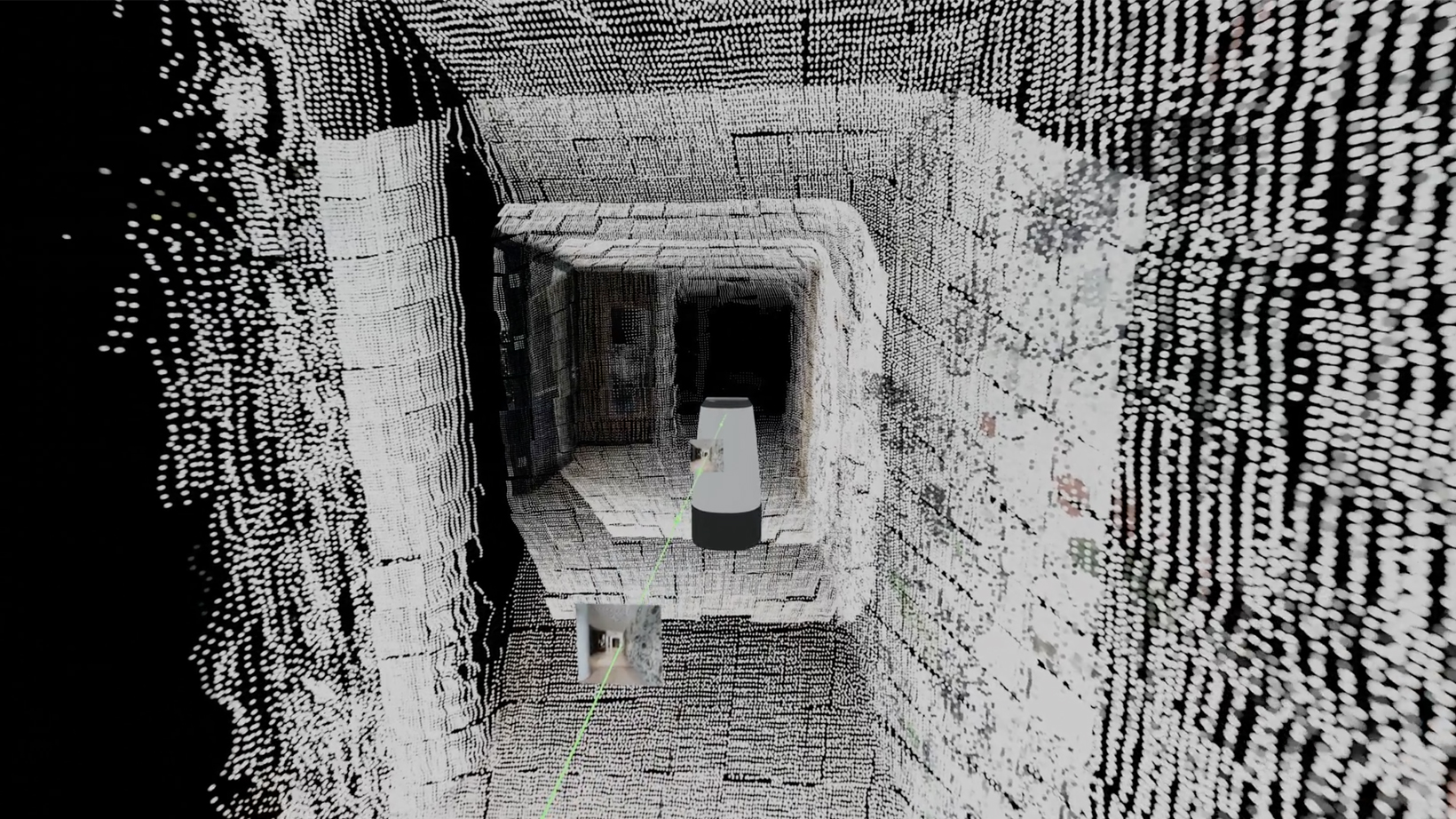
DUSt3R-2
Since its open-source release, DUSt3R has inspired numerous derivative studies such as MASt3R, MUSt3R, and PANSt3R. Each of these projects is as diverse and intriguing as its name. We are now preparing DUSt3R-2, a next-generation version that integrates these advancements while taking commercialization into account. DUSt3R-2 will set a new standard for robotic spatial perception technology.
► [Interview Video] A story about DUSt3R from a NAVER LABS Europe researcher