Beyond Online Intelligence, into Real-World Execution
AI agents are rapidly expanding their scope of application in digital environments. From information search to coding and reservations, they have already reached a high level of sophistication in decision-making, allowing them to understand user intent and identify the optimal path. The next frontier is extending these capabilities beyond the screen toward the physical world.
However, the systems that make up our everyday physical environments are not yet directly connected to AI agents. Physical infrastructures, such as buildings, robots, and autonomous systems, are still largely operated as separate systems. Ultimately, AI agents need an execution infrastructure to extend into the real world and translate digital decision-making into physical actions.
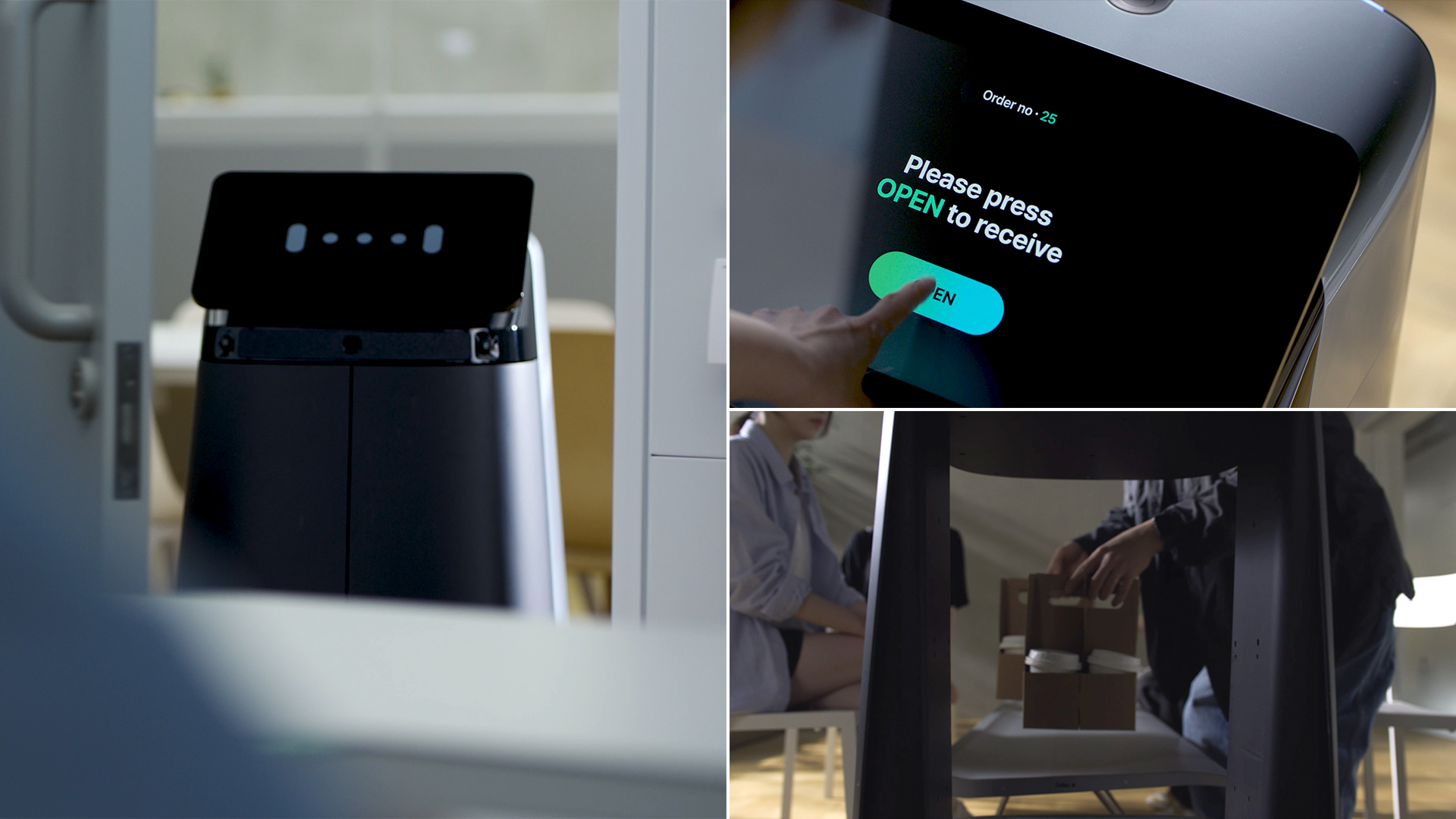
Extending Online Services into Physical Spaces Through Robots
ARC as the Lik Between AI Agents and Robots
When AI agents perform real-world tasks, robots act as the physical executors, transporting items, navigating spaces, and delivering services. However, real-world environments involve more than just a single robot in motion. Multiple robots move simultaneously to carry out tasks while continuously interacting with building infrastructure such as elevators and access control systems.
What matters here is not simply the ability to control an individual robot, but the capability to operate an environment where multiple robots and spatial infrastructure function together. As this requires determining which robot should perform each task, optimizing routes and task priorities, and managing interactions with building systems, it exceeds the level of individual devices, necessitating the use of an operating system to orchestrate the entire space.
ARC is the platform designed to perform this role. By connecting robots with a cloud-based control system, ARC centrally manages the movement and tasks of multiple robots while also coordinating their interactions with building infrastructure. In doing so, it enables decisions made in digital environments to be carried out as actions in physical spaces.
• Orchestration: Real-time coordination of routes and task priorities across multiple robots
• Physical API: Integrated connectivity between robots and building infrastructure, such as elevators and access doors
• Execution Layer: A layer that translates an agent’s plan into physical actions, including robot movement and task execution
Put simply, if an AI agent is responsible for reasoning and planning in the digital world, ARC serves as the physical execution layer that turns those plans into real-world actions.
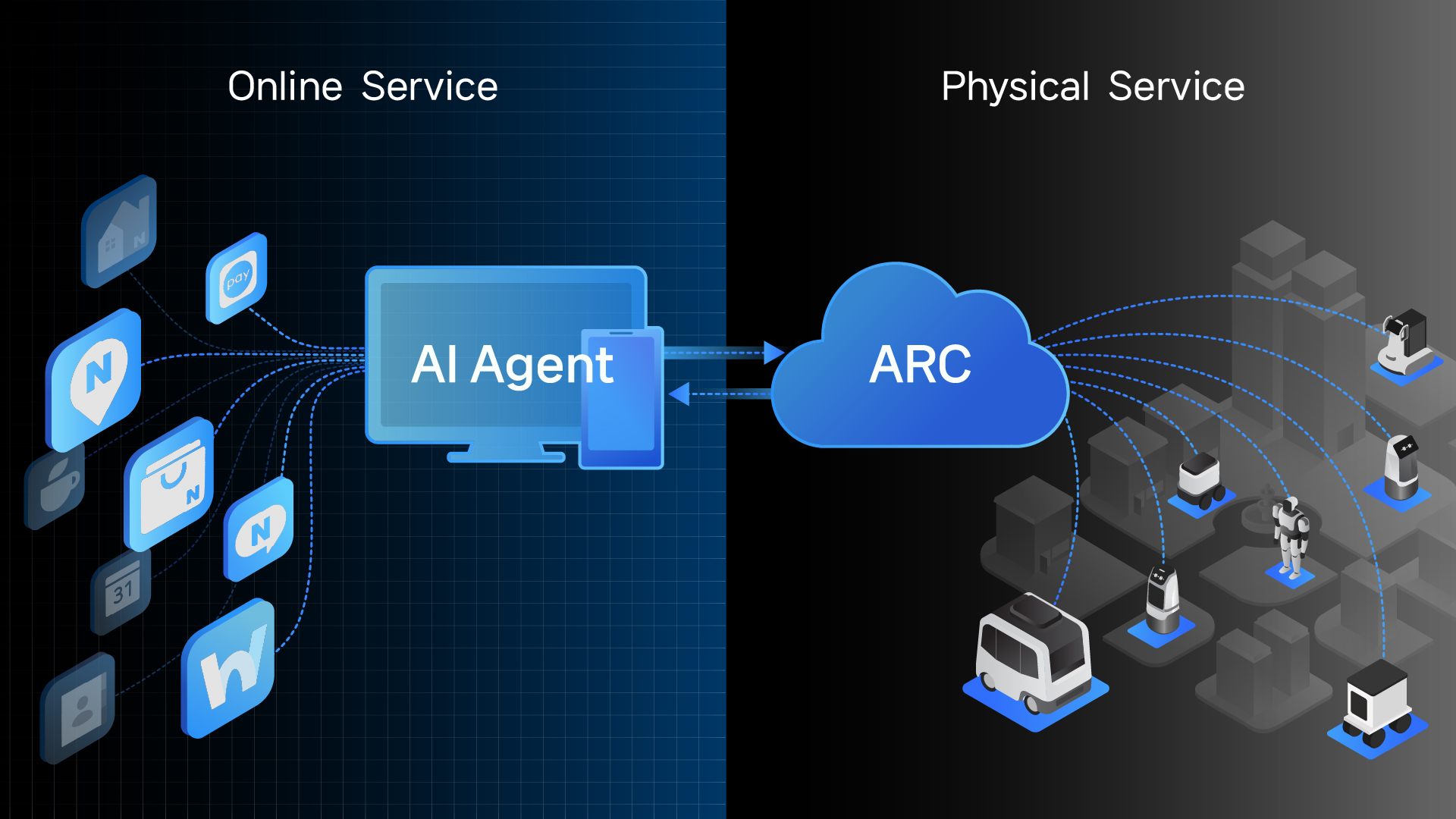
Expanding ARC’s Role in the Age of AI Agents
NAVER’s Expansion into the Physical World
NAVER has already been operating this execution framework in real-world environments. At its second headquarters, 1784, dozens of robots and building infrastructure have been stably connected and operated through ARC for more than four years. In this live service environment, ARC has been validated across robot navigation, task assignment, and integration with building systems. Based on this experience, ARC is now expanding beyond a single building into global buildings and urban environments, broadening its role as an execution platform that connects robots with spatial infrastructure.
In addition, NAVER’s digital services, such as commerce, maps, and payments, provide a critical foundation for linking the decisions of AI agents with physical execution. As ARC connects physical infrastructure like robots with NAVER’s online service ecosystem, NAVER’s services are evolving beyond the digital realm into service environments that can carry out real actions in physical spaces.