
To many, NAVER is known primarily as a search engine. Others recognize it as a commerce platform or a webtoon service. Yet, to some, it is a robotics company, and not just any robotics company, but one of the best in the world. That isn’t merely my opinion, but the evaluation of researchers, entrepreneurs, and media around the world.
To be precise, this evaluation concerns NAVER LABS. Established in January 2017 as NAVER’s R&D subsidiary, NAVER LABS has been focusing on developing future technologies for the physical world. How did NAVER LABS earn this reputation?
The answer is rather simple: by seeing things from a fresh perspective. Taking a conventional approach to problems leads to competition; but by solving fundamental issues, and breaking free from stereotypes and bias, one becomes a pioneer and leader. In this article, I will introduce the innovative approaches that NAVER LABS has taken in robotics and other future technologies.
Digital Twin: Creating the World from the Perspective of Robots
When introducing NAVER LABS at external keynotes, M1 is one of the first topics I bring up. Unveiled in 2016, the mapping robot M1 was NAVER’s very first robot.
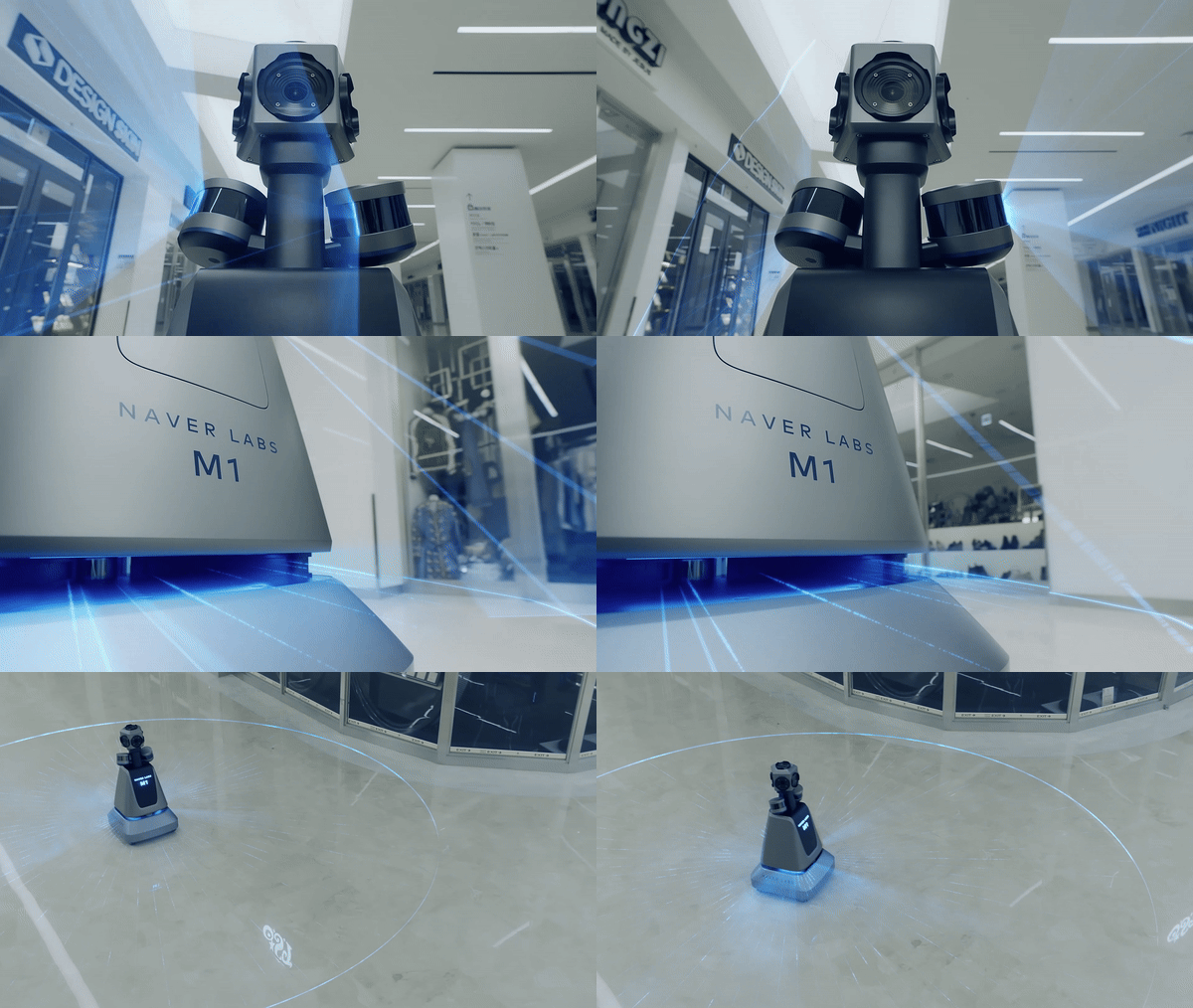
M1, a mapping robot, creating digital twins
Why did we choose M1 as our first robot? Back then, it was challenging to get robots to safely navigate indoors, in complex everyday spaces. The conventional approach to addressing these challenges would have been to attach more sensors to the robots. This would have increased production costs and complicated the algorithmic requirements. Instead, we decided to take a new approach.
“Let’s create maps for robots.”
Just as people use map apps or navigation systems to find their way in unfamiliar places, we decided to make maps dedicated to robots. M1 makes such maps: it creates a “digital twin” of the real world. A digital twin is a digital replica of a real-world environment, also known as a “mirror world”. This term was coined by Professor Michael Grieves at the University of Michigan in 2002. It became popular when listed in the Gartner Top 10 Strategic Technology Trends for 2017, whereas NAVER LABS had already adopted it.
Creating a digital twin and using this data for autonomous navigation of multiple robots allowed us to get a leg up on the competition. Existing robots had to perform all the core functions of mapping, localization, route generation, and obstacle avoidance, resulting in increased production costs. However, if a mapping robot with sophisticated, high-performance sensors were to collect spatial data on behalf of other robots and create a digital twin, then other robots could use this data for easy localization and route planning, while only requiring basic sensors to avoid obstacles, significantly reducing production costs. This ingenious methodology involves building a virtual world first, in order to operate in the real world.
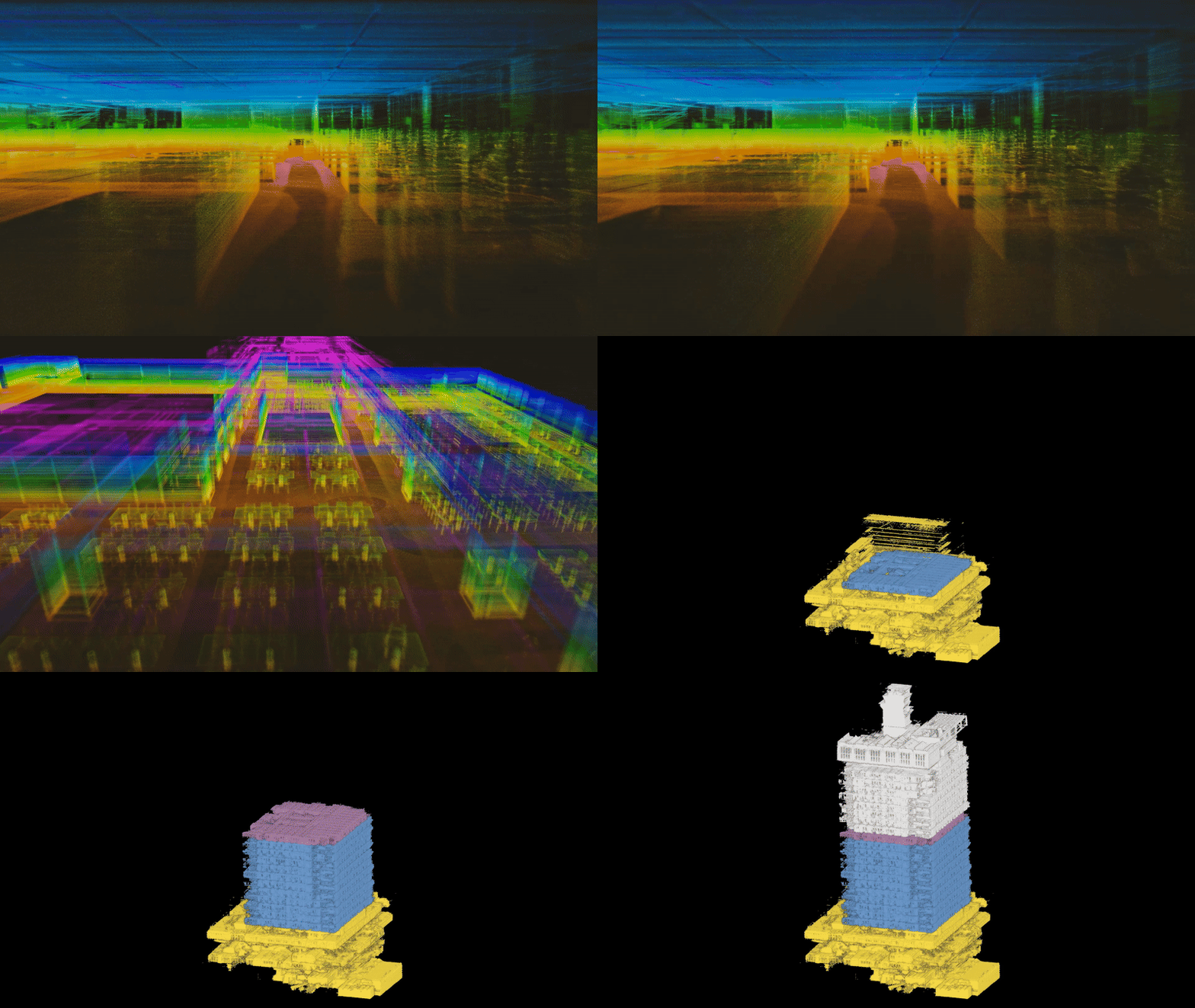
Digital twins for a robot’s autonomous driving and smart buildings
There is one more technology that robots need if we are to utilize digital twins for autonomous driving. That is, computer-vision-based localization or visual localization technology. This is an AI technology that enables robots to accurately perceive their location indoors, out of GPS coverage. A single photo is all it takes for a robot to pinpoint its location, despite changes in lighting, season, viewing angle, the presence or absence of pedestrians, the interior design, and more. Visual localization even reduces robot production costs because it doesn't rely on expensive laser scanners. Being highly versatile, it is easily applicable to the development of smartphone AR navigation, which is useful for humans as well as robots. NAVER LABS' visual-localization technology has maintained world-class performance for years.
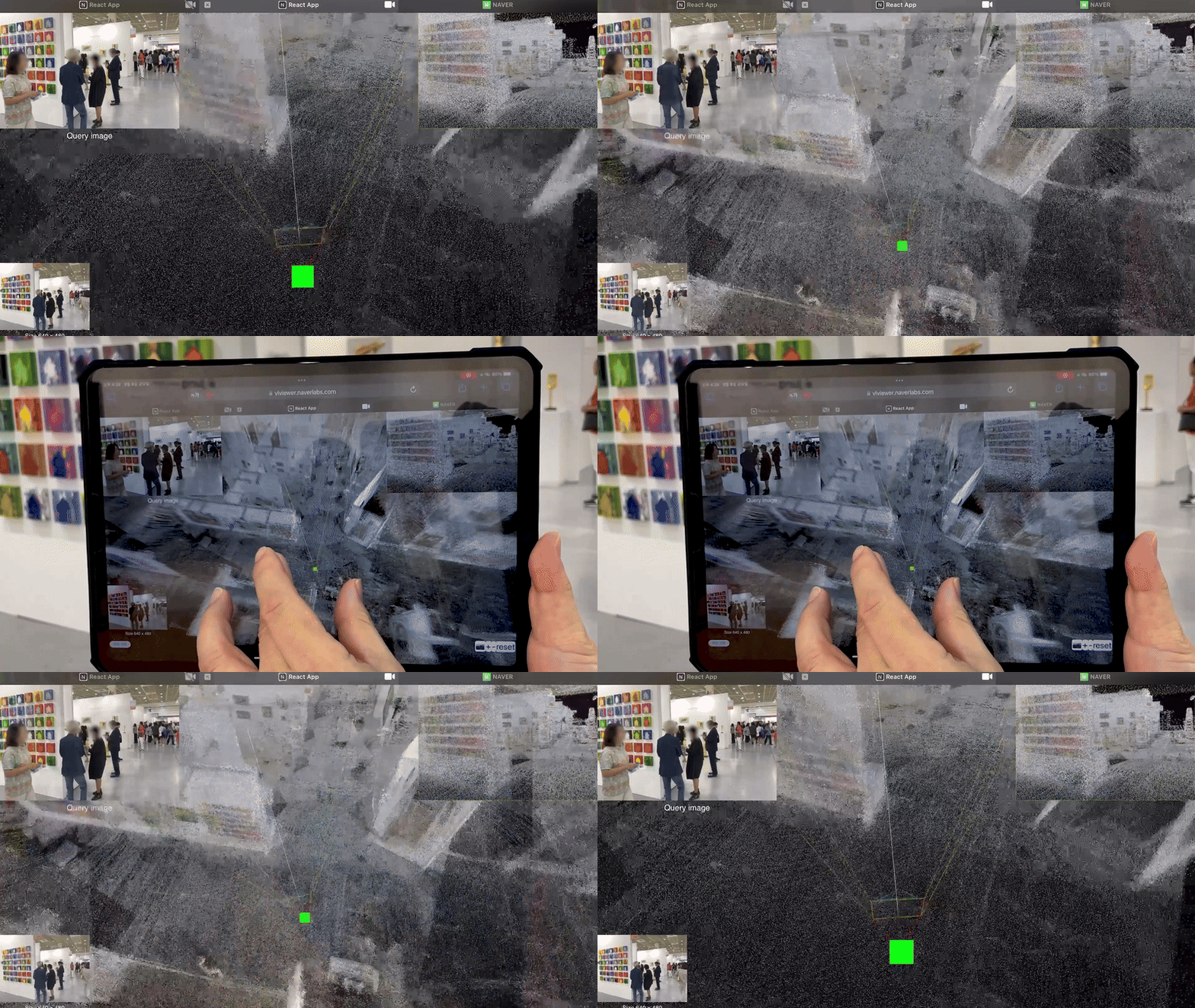
Visual localization allowing for precise perception of indoor location
Broadening our scope, self-driving cars, often referred to as "robots on the road”, also benefit from digital-twin data such as HD maps for safer and more efficient navigation. This application of course requires a different approach to creating digital twins, as cities are too large for mapping robots like M1. To address this, NAVER LABS came up with a unique solution called ALIKE, which uses aerial images and AI to rapidly and accurately create digital twins of large cities.
In 2020, NAVER LABS used ALIKE to create a 3D model of Seoul, using approximately 25,000 aerial photographs to render over 600,000 buildings and 2,092 kilometers of roads in minute detail, including lane structures and road markings.

Digital twins for Seoul city as a whole
In 2023, we signed a contract with the Saudi Arabian Ministry of Municipal and Rural Affairs and Housing (MOMRAH) to build a digital twin platform for major cities. This will be used for urban digital transformation in Saudi Arabia, enabling urban planning, monitoring, flood prediction and more.
Digital twins serve as the foundational platform for a wide range of applications, while also providing the underlying infrastructure for numerous systems. That is to say, they are the starting point of all tech convergence for everyday spaces. Although NAVER LABS' initial focus on digital twin robots instead of humanoid or service robots puzzled many, it is now clear that digital twins are crucial for transforming our everyday spaces into future service platforms.
Brainless Robot Technology: Connecting Robots to the Cloud with 5G
Digital-twin data is stored in the cloud, from where it can be used to control robots: this concept is known as cloud robotics. This technology allows the cloud to provide the computing power for multiple robots simultaneously, enabling continuous updates and efficient management, while enhancing the robots’ performance. The cloud played a significant role in the explosive growth of smartphones, as it enabled small devices to perform large tasks: now the cloud can do the same for robots.
“What if the cloud became the robot’s brain?”
This approach resolves many problems in robotics. To give an example, while small robots can traditionally only house small computers, connection to the cloud breaks this size constraint, allowing small robots to perform exceptionally complex tasks. What is more, this approach can improve battery efficiency – a key factor for autonomous driving robots, as it enables the offloading of energy-hungry processing to the cloud. Moreover, if hundreds or thousands of robots operate in a large space, cloud robotics will be the most efficient approach to managing and updating them simultaneously.
As such, NAVER LABS has been conducting research on grafting robot technology to the cloud. Initially the research was on accessing digital-twin data. The problem was that robots could not respond as instantly when using wireless communication as they could when using wired communication, no matter how fast the cloud computers at hand. This was all due to the latency of wireless communication.
As we continued this research, it led to a pivotal moment: the advent of 5G.
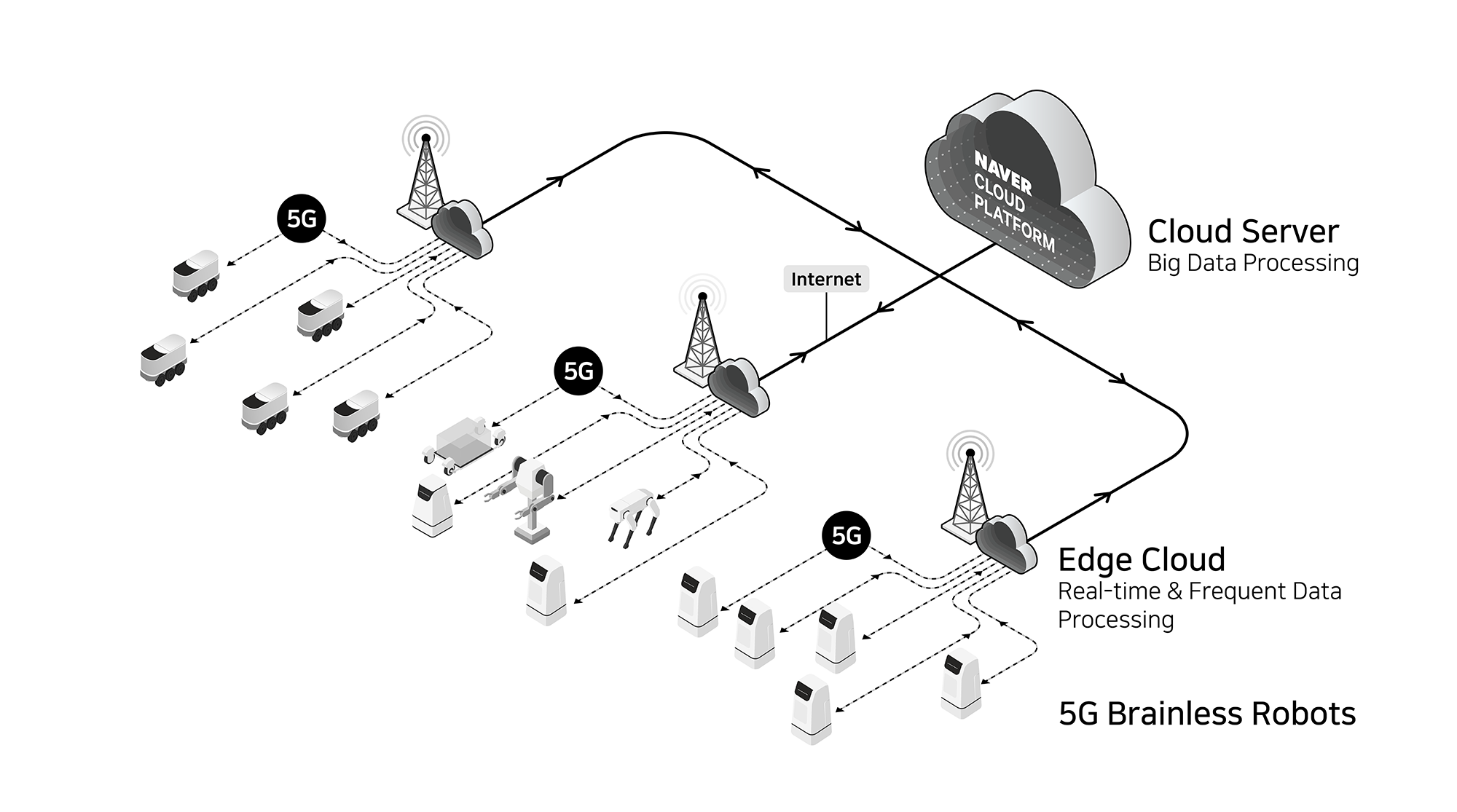
5G brainless robot technology relocating a robot’s brain on the cloud
Robotics engineers saw a great potential in 5G technology. One of its key features is ultra-low latency, with transmission delays of no more than 1 ms (1 millisecond: one-thousandth of a second). This is much lower than the typical 50 milliseconds of 4G. The real-world latency of 5G is around 10-12 milliseconds, making it suitable for supporting real-time applications like cloud-based vision processing. This ultra-low latency can be leveraged to revolutionize the response time of the robots connected to the cloud. Put simply, the brains of robots can be moved to the cloud. This “brainless robot” technology minimizes the on-body computing by having the brain in the cloud, irrespective of the shape or size of the robot’s hardware.
In January 2019, even before 5G was commercialized, we successfully demonstrated 5G brainless robots at CES. This success was the result of seamless collaboration between engineers in robotics, cloud computing, and network engineering, since the summer of 2018.
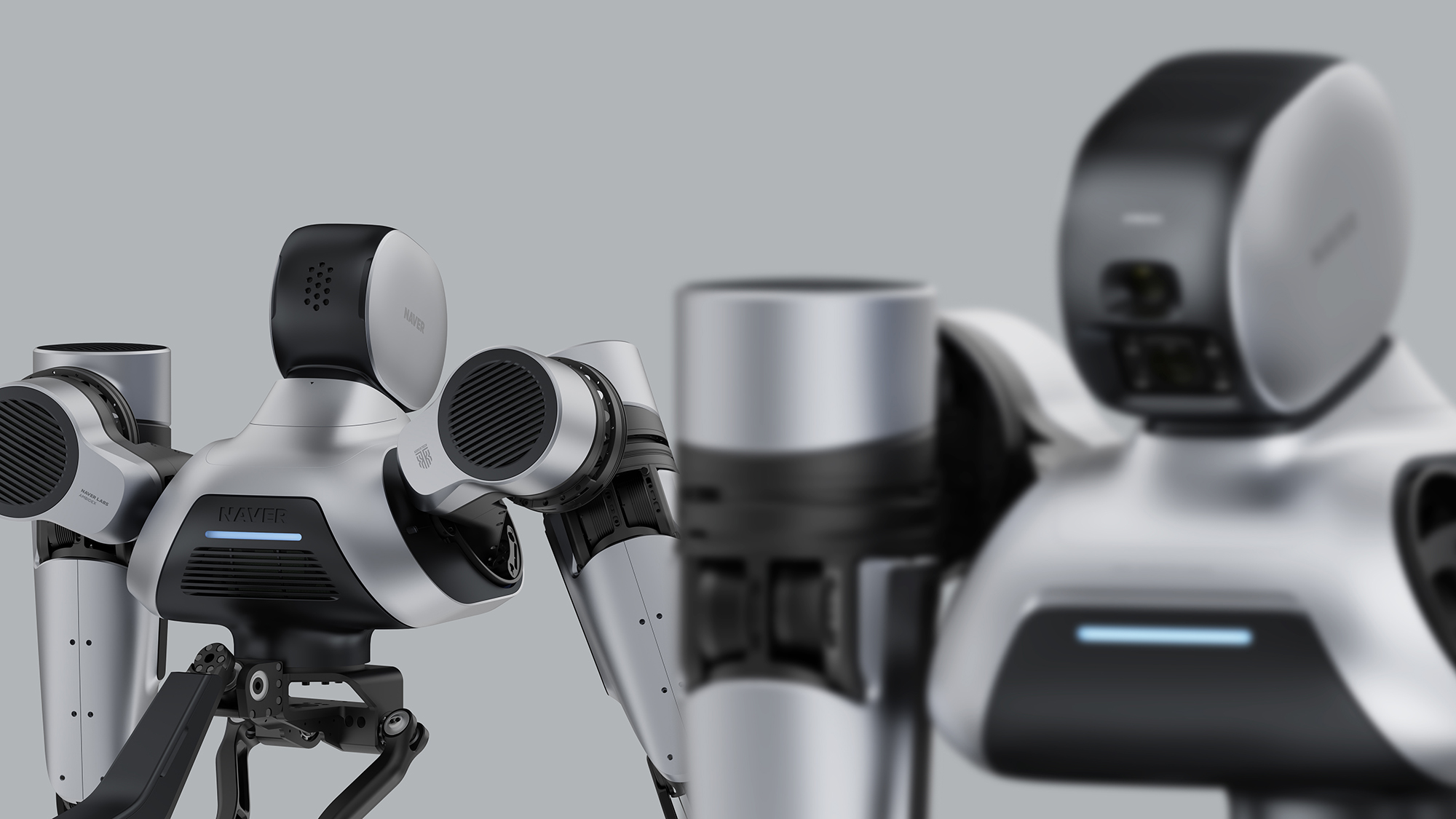
AMBIDEX, a dual-armed robot, developed to safely interact with humans
The world’s first 5G brainless robot technology was applied to AMBIDEX, a dual-armed robot developed through a research collaboration between NAVER LABS and KoreaTech. AMBIDEX attracted attention from roboticists and media around the world for its innovative power transmission mechanism that enables safe interaction with humans. With seven degrees of freedom, like a human arm, it can execute precise force control and rapid movements, making it ideal for showcasing brainless-robot technology. In all honesty, we could not guarantee perfection even right before the CES, and this made us hesitate to put the 5G sticker up until the day before the opening.
Brainless-robot technology contributes to the popularization of future robotic services in various ways. First, the cloud system can enhance the robot's performance and battery efficiency by providing the necessary computing power and the more robots there are in operation, the greater the efficiency. It can also integrate with various building infrastructures like automatic doors and elevators, while ensuring stable autonomous driving based on digital-twin data. Multiple robots can perform optimized tasks without confusion, and simultaneous updates to all robots’ data can make them collectively smarter.
Most importantly, the convergence with cloud technology is essential for the unrestricted application of technologies necessary for future robots such as computer vision and AI technology.
The recent rapid growth of on-device AI and edge AI technologies, when combined with cloud, is expected to create significant synergies. The capabilities of both the robot body and the cloud brain are expanding rapidly.
Foundation Models: An AI Approach for Future Robots
Now, I’d like to talk about AI for robots. NAVER LABS has an AI research lab not only in Korea but also in the scenic foothills of the Alps, in Grenoble, France where you can see the beautiful snow-capped mountains. This is NAVER LABS Europe, where AI researchers from 27 countries study future technologies, focusing particularly on using AI to help robots understand and solve complex real-world situations. AI is undeniably crucial for bringing robots into everyday life, yet conventional methods have limitations. Robots still frequently encounter failures and errors due to the real world’s complexity.
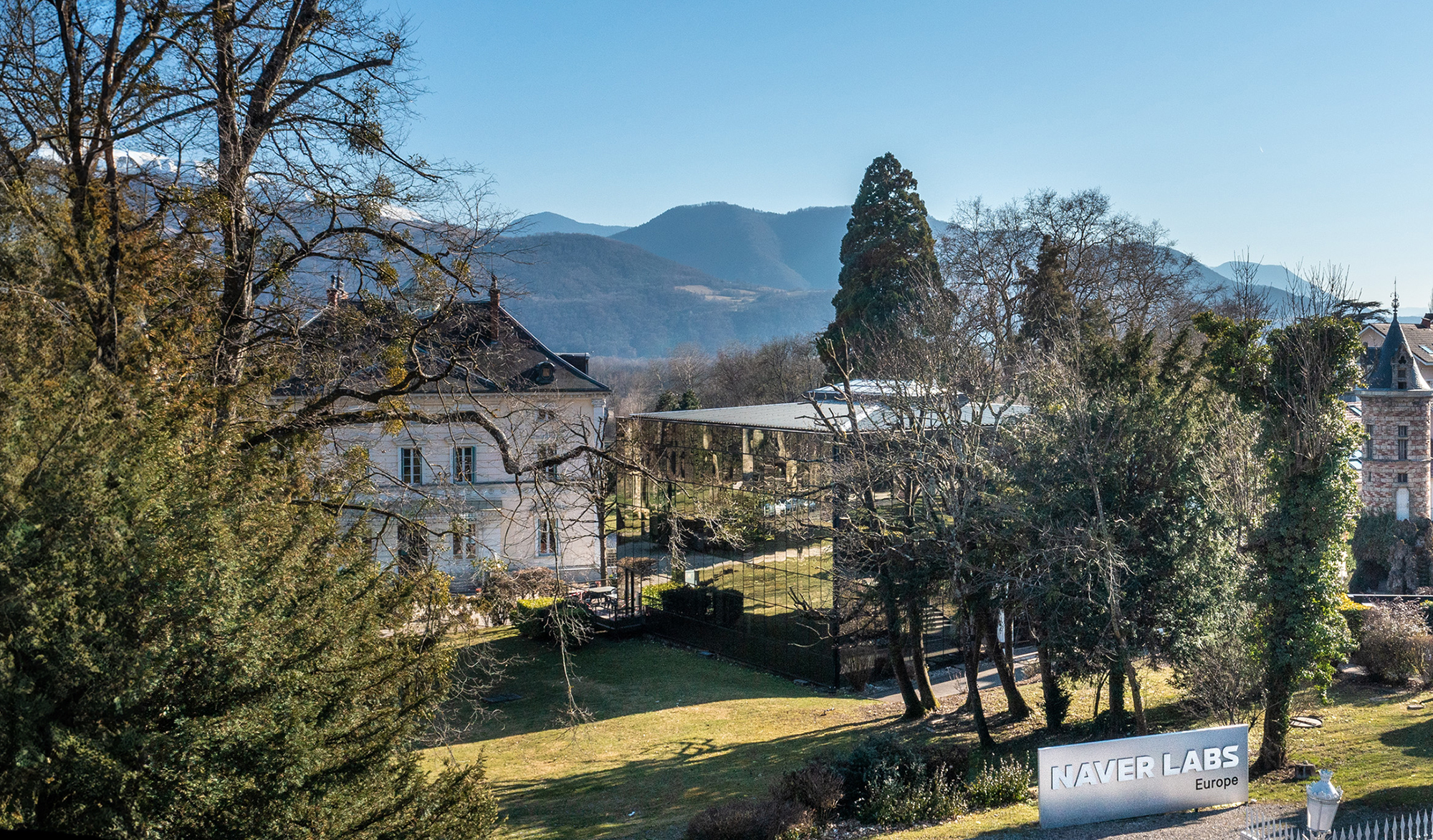
NAVER LABS Europe, an AI lab in Grenoble, France
In 2021, the lab was engaged in intense discussions, about a radical change to its research methods: whether or not to convert all the projects to “foundation models.” Foundation models are AI models that have been trained on a wide range of data, so that they can be applied to a wide range of tasks. Large language models (LLMs), such as NAVER’s HyperCLOVA and OpenAI’s GPT-4 are examples of such models.
NAVER LABS researchers recognized that this new AI methodology had the potential to overcome several of the key limitations of AI for robotics, and boldly shifted all project directions.
Why did they make this choice? To explain, we need to discuss the limitations of traditional AI approaches. Traditional AI research involved identifying problems, collecting related data, and training neural networks to find solutions. This approach struggled with application to diverse real-world situations and often resulted in performance degradation when transitioning from training to deployment as environmental details changed. Also, from a service perspective, it was challenging to develop AI that could accommodate diverse user needs. A new approach was needed to circumvent these limitations: an approach based on foundation models. The idea is to train on a large amount of diverse robotics data, just as LLMs are trained on huge amounts of diverse sentence data.
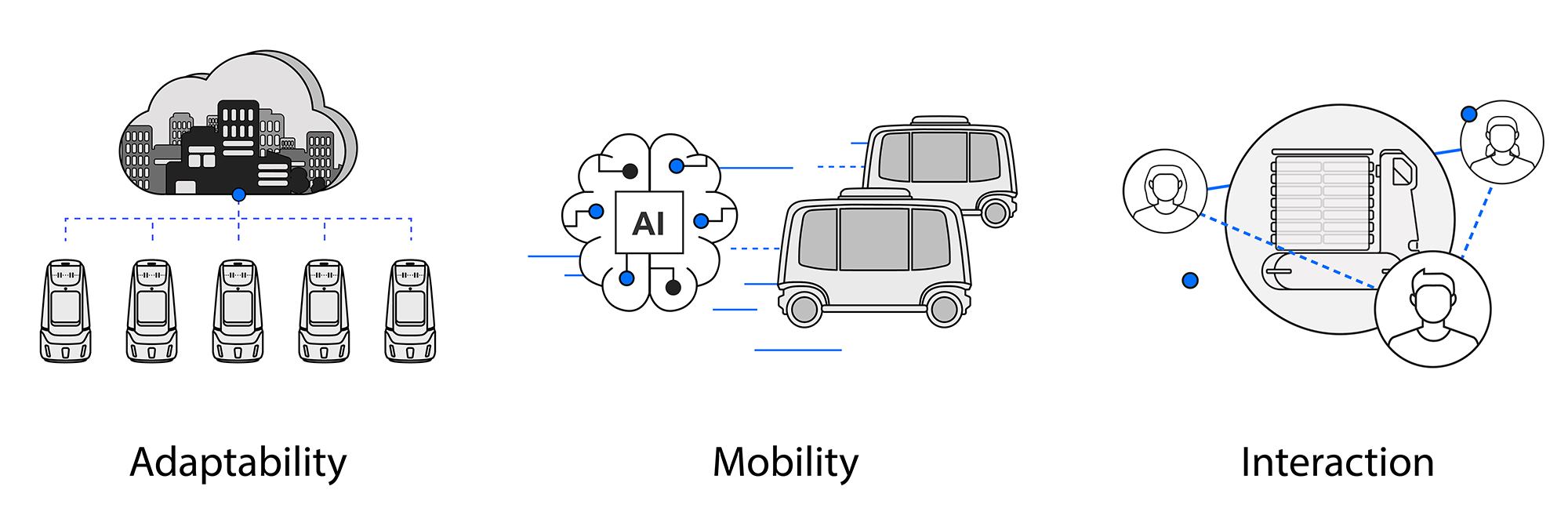
Fields of application of foundation models for robots
The new robotics methodology chosen by NAVER LABS’ AI researchers is yielding significant results. We have worked on 11 projects in action, vision, and interaction, all demonstrating performance surpassing existing AI technologies. In 2023, we unveiled 'CROCO' (Cross-view Completion), a foundation model for robot vision, which teaches AI to understand the real world using different viewpoints of the same scene, just as human 3D perception relies on viewpoints from two eyes. After training CROCO with massive image datasets, we found that robots could excel at various functions needed to understand the complex physical world.

DUSt3R, an AI tool that converts 2D images to 3D via a single processing
DUSt3R, a CROCO-based AI tool that instantly converts 2D images to 3D, has attracted significant attention from the academic community. While traditional 2D-to-3D technologies require a complicated process and a lot of resources, a few images and a few seconds are all DUSt3R needs to reconstruct a space in 3D and extract geometric information. The amazing performance of DUSt3R has been praised as “a unique methodology that completely sets it apart from traditional technologies in the field of space reconstruction.” MASt3R, an upgraded version of DUSt3R, has further improved its performance and large-scale image processing capabilities. Even now, NAVER LABS Europe is developing AI tools for more powerful models and upgraded versions of robots, And at the center of it all is the foundation model.
Intersection of Technology and Everyday Life: NAVER 1784
The technologies I have described above stem from distinct perspectives and unique approaches. However, the next example may have been a “crazy” decision even in hindsight. Applying technology to everyday life requires much time, much effort, and above all, a testbed. NAVER decided to redesign their second headquarters, then under construction up to the fifth floor, to serve as a testbed for robots. From that moment, every part of the design and facilities was changed, to take robots into consideration. Our aim was to set unprecedented standards instead of simply placing robots in the usual office environment.
Integrating lab technologies into everyday spaces requires more time as well as trial and error than expected. It was also important to keep engineers from being overly mindful of the building’s owner when working on their robot experiments. As it was hard to find a building suited to our needs, we just built one, combining the lab and office into one.
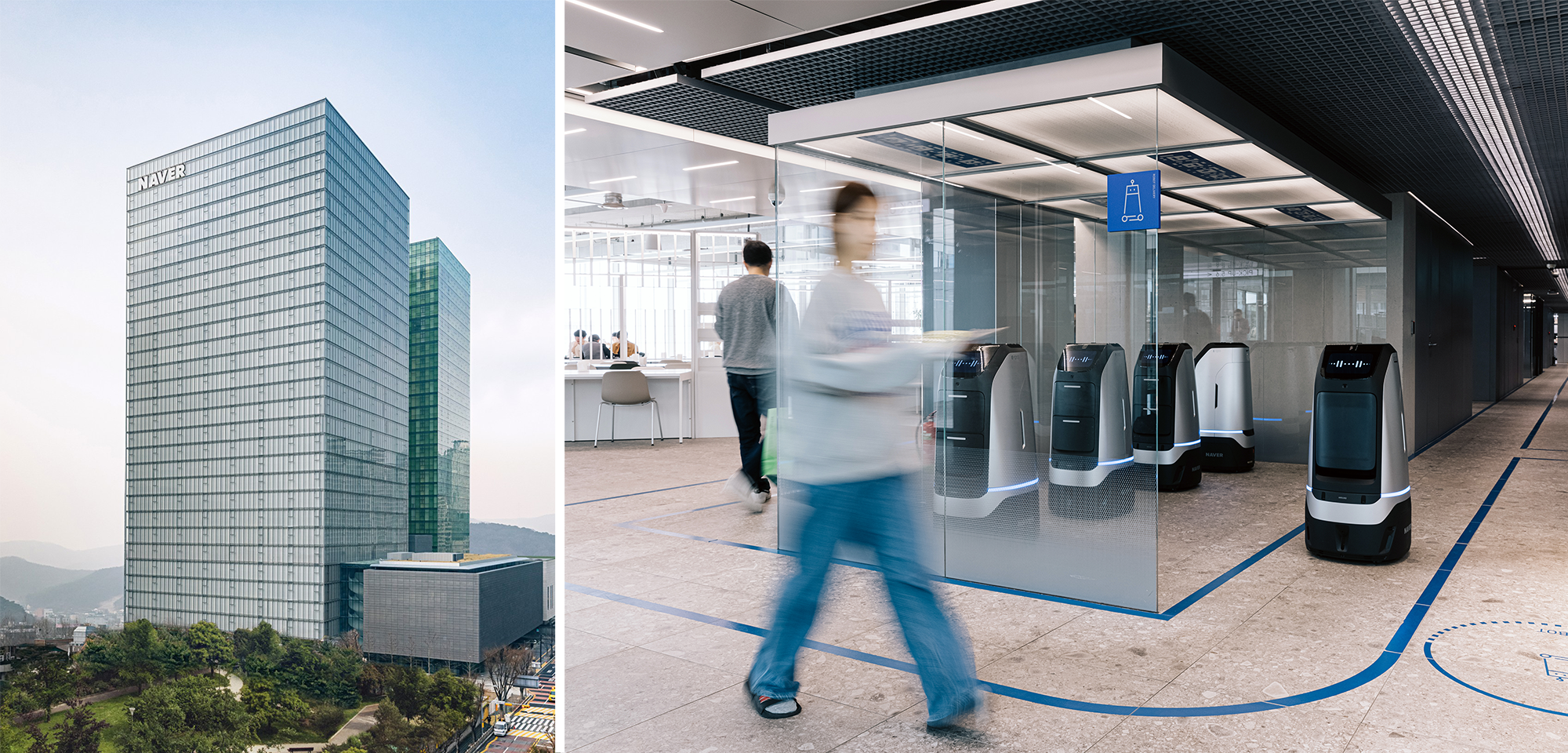
NAVER 1784, the world’s first robot-friendly building
This building is named NAVER 1784. It is named after the building’s address: 178-4 Jeongja-dong, Bundang-gu, Seongnam, Gyeonggi-do, but 1784 is also recognized as a central year of the First Industrial Revolution. Just as the Industrial Revolution brought about groundbreaking changes to humanity, 1784 is intended to be a giant testbed for relentless challenges and experiments aimed at a better future.
Since its unveiling in 2022, NAVER 1784 has become a major reference for smart buildings, visited by over 10,000 people from 65 countries as of May 2024. It has accumulated valuable data about future spaces where people and robots coexist, garnering praise from many parts of the world about the originality and sustainability of the systems demonstrated. NAVER is the only company in the world that possesses such data on such a scale. 1784 is a globally unprecedented robot testbed: over 5,000 people can gather to work on its 8 basement levels, 28 floors, and 165,000 ㎡ of total ground area.
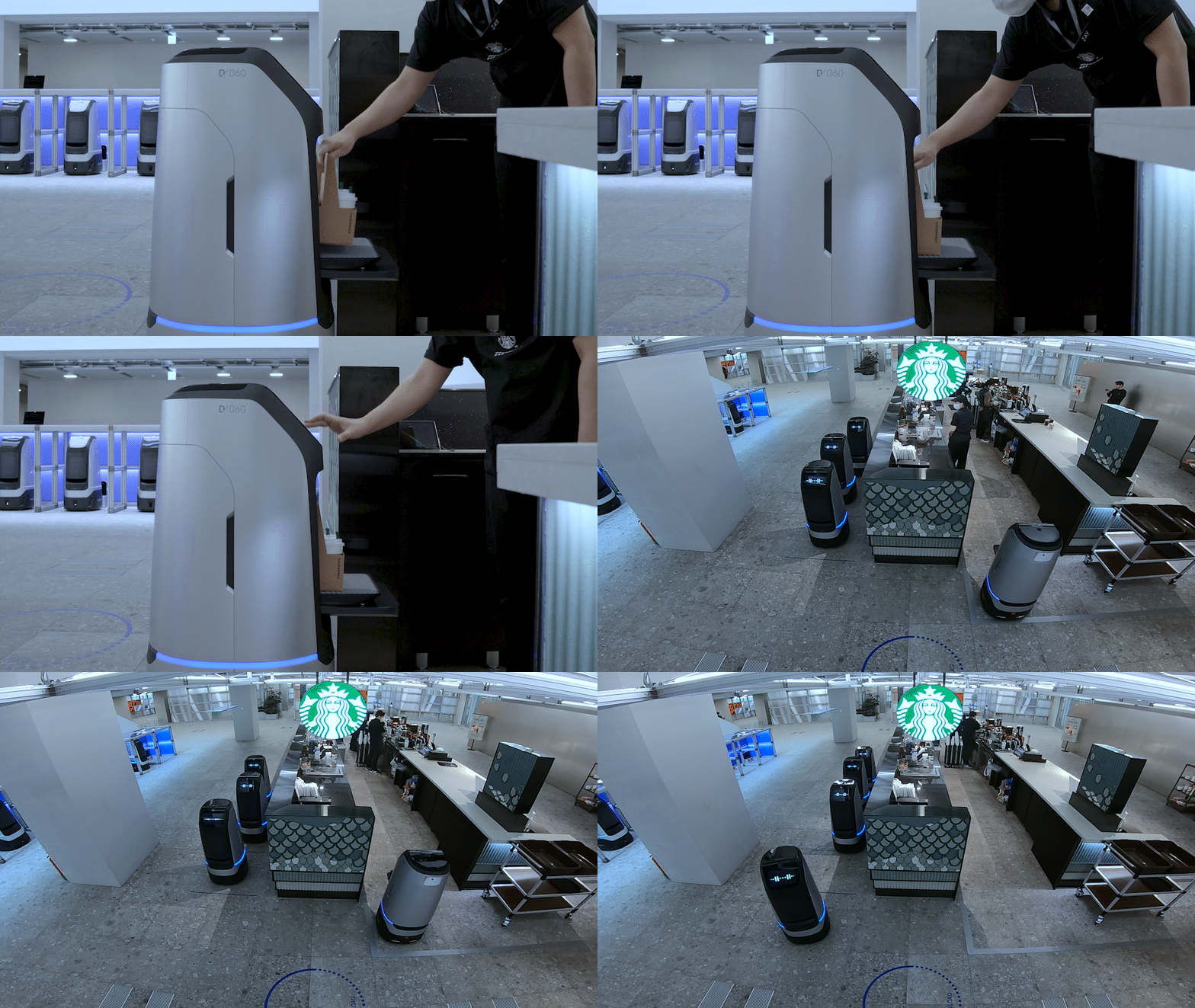
Rookie, the service robot of 1784
Trials have taken place everywhere in the building. First, the entire building was digitally replicated using digital twin data, on the NAVER CLOUD Platform. ARC, a system that connects the digital world to the physical world, was also developed. ARC brain functions as the brain of all robots and connects with various types of infrastructure and service. ARC eye measures robots’ locations and plans routes. Moreover, we applied technologies and solutions for coexistence with 100 robots throughout the whole building, including the world’s first robot-only elevator called ROBOPORT, the first deployment of specialized 5G, along with cloud control, and the Internet of Things (IoT) integrations.
The technology of 1784 has been extended to NAVER’s hyperscale data center, GAK Sejong. It is the size of 41 soccer fields and the round-trip distance between the operation wing and server wing is 850 m. Three types of robots are deployed in each location and connected to each other. SeRo is in charge of IT warehouses, GaRo of the paths between warehouses and server rooms, and ALT-B of workers’ movements between buildings. This interconnected robot system looks like an elevator that is unrolled horizontally. In short, NAVER has two testbeds: 1784 for smart buildings and GAK Sejong for smart campuses.
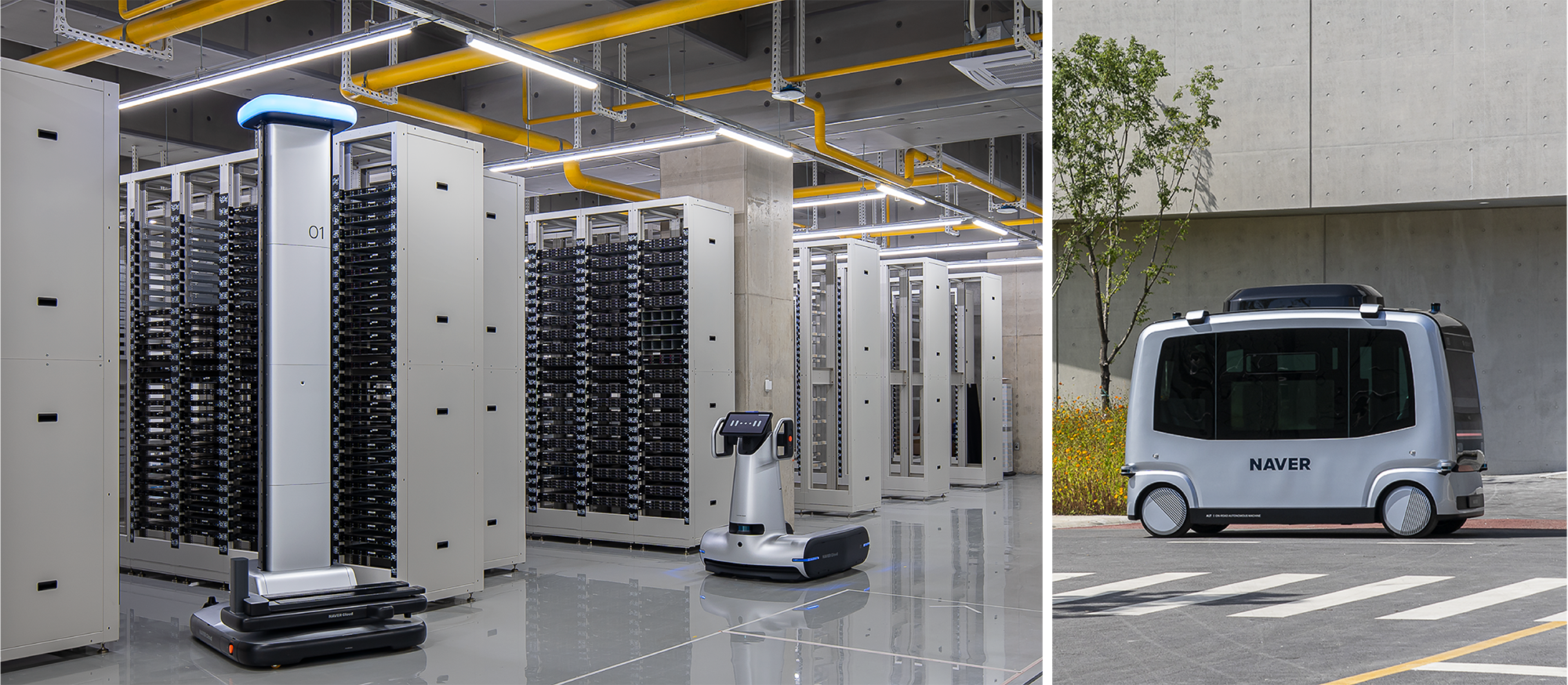
SeRo (the robot on the left), GaRo (the robot at the center), ALT-B (the autonomous driving shuttle on the right) at the hyper-scale data center, GAK Sejong
In 2024, we are garnering significant attention again by introducing ARC mind, the world’s first web-platform-based OS for robots, which is the result of a collaboration between robotic engineers and web-development teams in 1784. Its goal is to offer an environment that enables web developers in every corner of the world to easily develop robot services. As a versatile platform, the web offers excellent compatibility, high productivity, and a large pool of developers, potentially boosting the diversity of robot services. After sufficient upgrades through 1784’s robots, ARC mind aims to enter an open ecosystem.
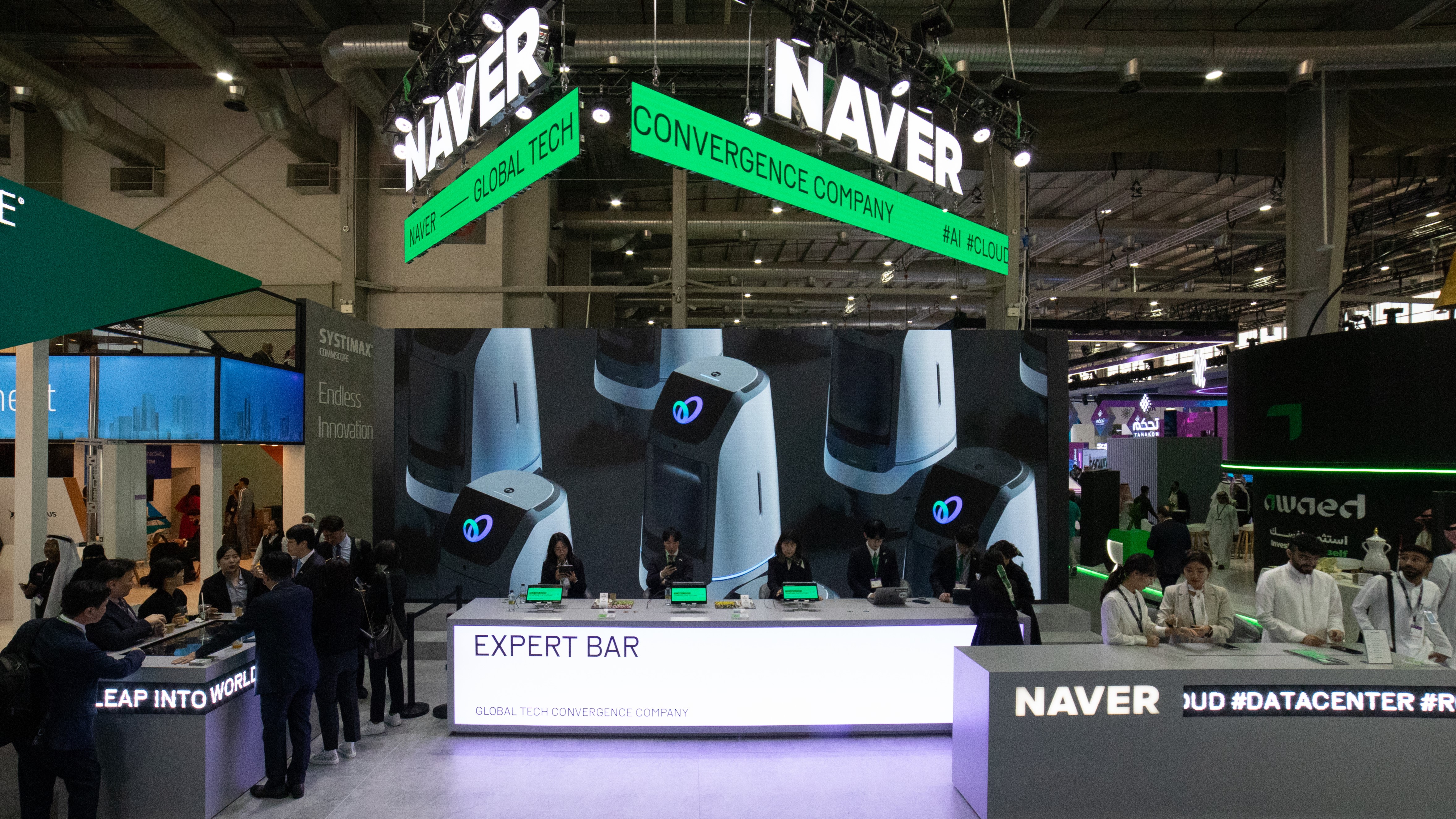
ARC mind, first unveiled at the LEAP 2024, the Saudi Arabia International Technology Exhibition
NAVER LABS: Blueprint of NAVER’s Future
NAVER has ceaselessly been in pursuit of changes and innovations to be prepared for the future. As a tech company, we will fall behind if we rest on our laurels without constant evolution. NAVER LABS plays a key role in guiding such changes, connecting NAVER to a new future through groundbreaking technology and research. NAVER aims to become a platform that integrates advanced technology and daily life in future cities, offering even more remarkable experiences and value than it does now. Achieving this will require significant technological innovation and unique approaches.
Thinking outside the box is not inherently difficult. It might seem so when we lack confidence. That’s why I would like to inspire my fellow researchers and engineers with the example of NAVER LABS.
Only by pursuing unique approaches can we escape all competition.
▶︎ Sangok Seok, CEO of NAVER LABS, has been leading NAVER's research on next-generation technology platforms through the convergence of robotics, AI, autonomous driving, and digital twins. Holding bachelor's and master's degrees in Mechanical Aerospace Engineering from Seoul National University, and a doctorate's degree in Mechanical Engineering from Massachusetts Institute of Technology. Having assumed the role of CEO of NAVER LABS in 2019 and NAVER LABS Europe in 2020, he is now focusing on preparing for the future of NAVER to connect humans, machines, spaces, and information by developing original and advanced technologies with world-class researchers from about 27 countries.
▶︎ This article is adapted and reorganized from the article "Breaking Through Fierce AI Robotics Competition with Unique Innovation" published on Jiphyun Network contributed by Sangok Seok, CEO of NAVER LABS.
▶︎ The "Forward Thinking" series is an occasional online publication that shares the knowledge and expertise of outstanding researchers of NAVER LABS, focusing on the major technology trends of our time, including AI, robotics, autonomous driving, and digital twins. www.naverlabs.com/en/forwardthinking