A place preparing for the future should also ruminate retrospectively. Here is a summary of NAVER LABS’ defining moments in 2019, which had been challenging but worth the effort.
CES 2019 & the World’s First Demonstration of a 5G Brainless Robot
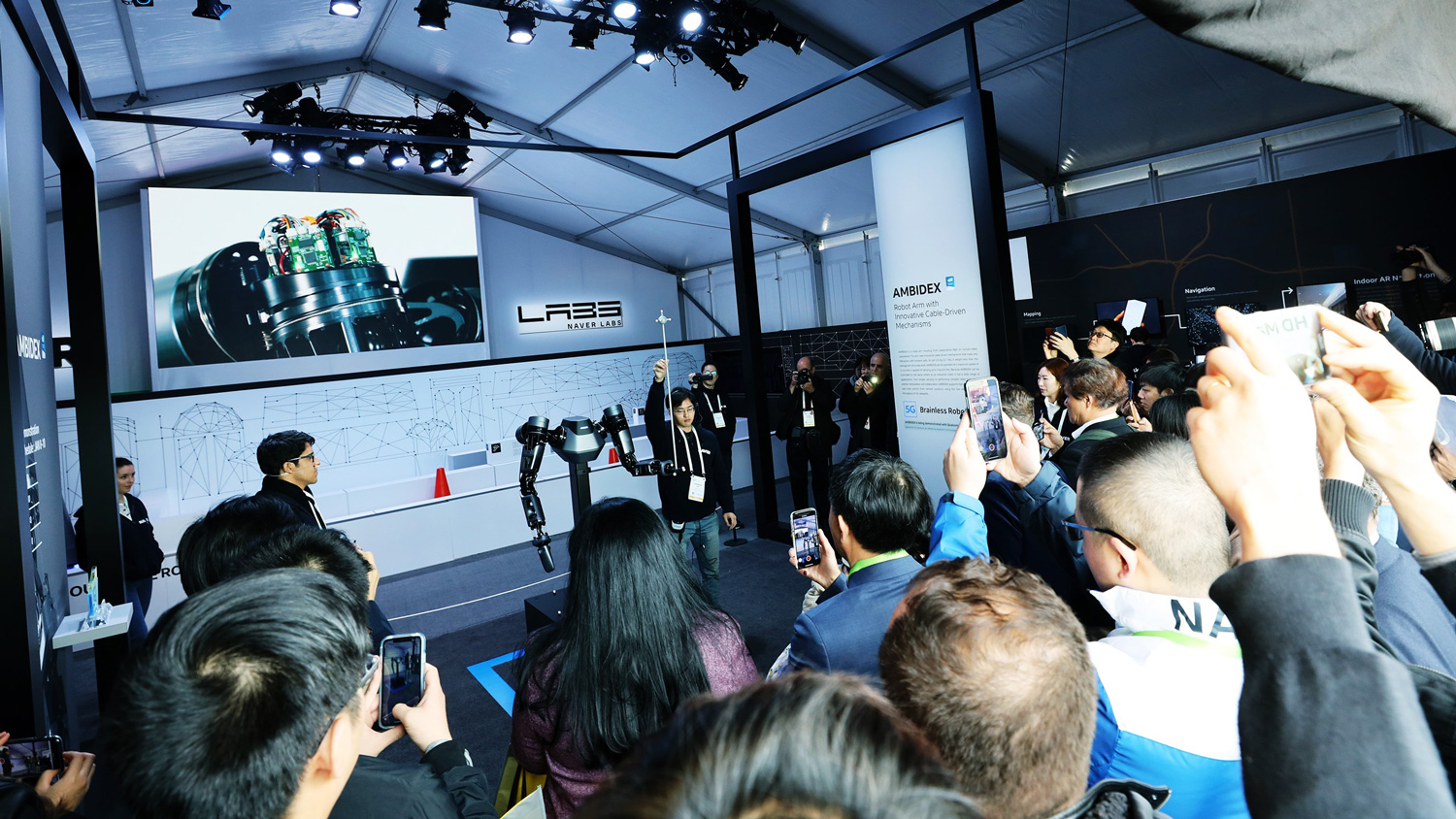
It was around this time last year. We had our hands full preparing for our booth at CES 2019. It was also the first CES booth for NAVER. We were on edge to reveal a range of achievements that we had researched and accomplished to people from all over the world.
However, we had an ace up our sleeve. It was our demonstration of NAVER LABS’ 5G brainless robot. We may now be familiar with 5G, but a year ago, it had not yet been commercialized.
Back then, it was unclear who would be able to control high-performance robots built upon the ultra-low latency of 5G. The successful demonstration of the world’s first 5G brainless robot technology clearly caught the eye of the show that we had to double our previous demonstration schedule. The fascinating brainless technology unveiled this day is also the key solution to the cloud-based robot service that we continue to further refine and innovate.
Other technological demonstrations were also highly successful. A wide array of technologies garnered great attention, such as the uniquely original hybrid HD mapping for autonomous vehicles, the natural autonomous driving robot platform of AROUND that is based on the map cloud and deep reinforcement learning without any laser scanners, and the three-dimensional augmented reality head up display AHEAD.
“I must say I was most impressed by the robots of NAVER LABS at CES 2019.” (Professor Dennis Hong of UCLA during a press interview)
New CEO Sangok Seok
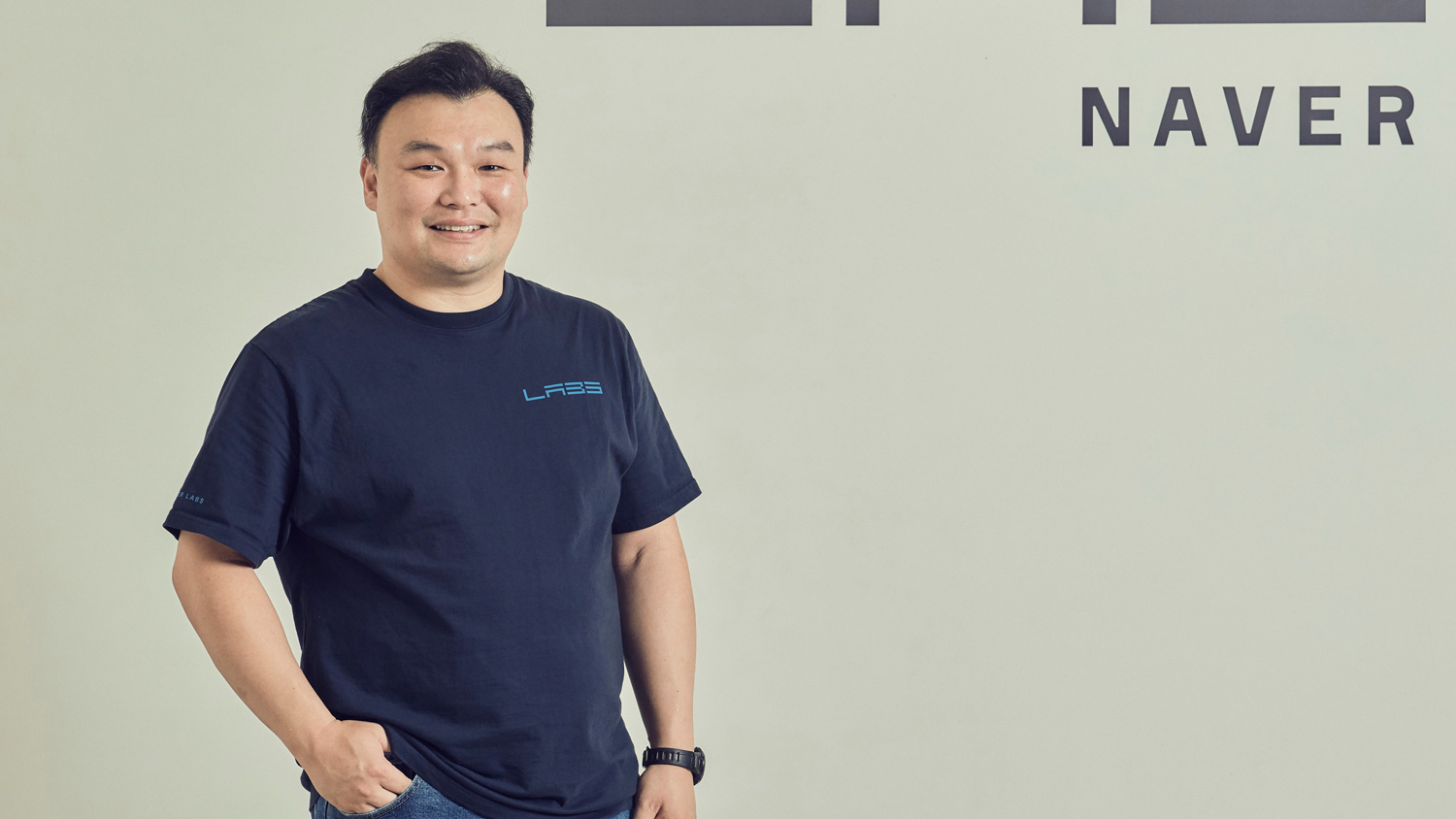
As soon as we returned from CES, a significant change was made to NAVER LABS; Sangok Seok, leader of NAVER LABS’ robotics group, was appointed as the new CEO. There were countless articles in the vein of “What is happening at NAVER LABS?” The company appeared to be in a crisis, and in fact, it was. It is not easy for any organization to replace its current leader. Now looking back, it’s safe to say that although time went fast, all was and is well! The new CEO did a great job and all the members of NAVER LABS remained passionate. It may be better to leave a mark in our DNA of searching for shortcuts in the midst of chaos arising from change rather than being buried in gradual stagnation.
With all that said, we would like to introduce our chief executive officer CEO Sangok Seok, who began to lead NAVER LABS this year. His research on the soft autonomous robot called Meshworm and the running robot MIT Cheetah conducted during his years as a PhD student in mechanical engineering drew great attention, and his paper on MIT Cheetah, in particular, won the award for the best paper at the 2016 IEEE/ASME Transactions on Mechatronics. Since joining NAVER in September 2015, he has focused on the popularization of robot platforms that naturally provide information and services to people in their daily lives, while also carrying out a wide range of advanced researches and making an investment on the internalization of cutting-edge technologies.
“NAVER LABS is comprised of world-class talents. Together, we will strive to upgrade our technology platforms with the most innovative and natural interfaces.” (CEO Sangok Seok during an official interview for his appointment as CEO)
Vision of a Future City, A-CITY
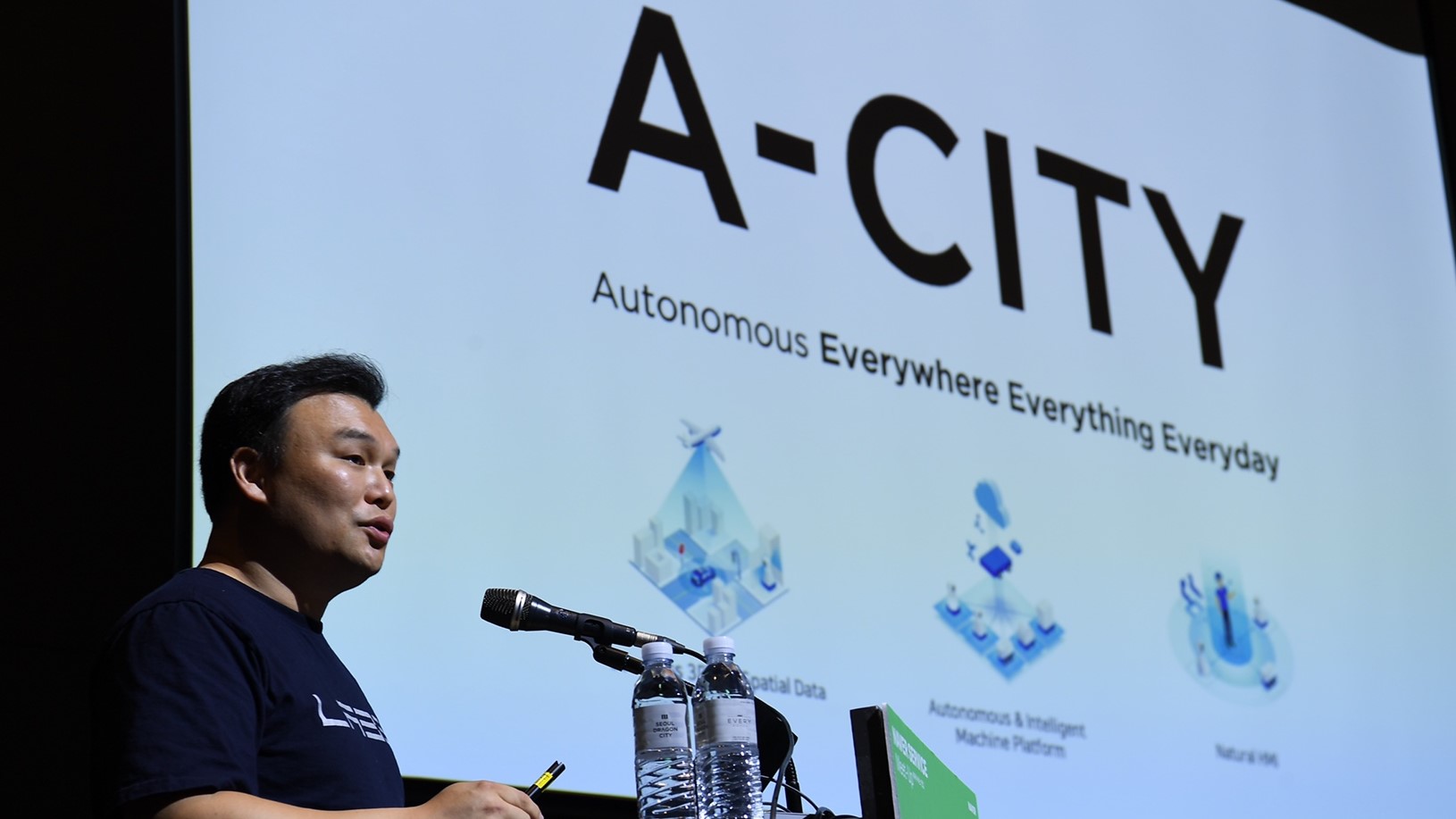
Last June, we held a conference to present the visions and roadmap of NAVER LABS where CEO Sangok Seok offered the intriguing concept of “autonomous space.” He emphasized that a space containing information, services and products will move on its own and create new connections within a city via space and mobility rather than separating them. Just like the advent of elevators had expanded urban space vertically for citizens, the future of autonomous space will bring a whole new aspect into our lives. This vision of a future city is ‘A-CITY’ and is also the goal of the technological researches that are currently conducted at NAVER LABS.
In fact, A-CITY is simply a concept as well as an image. However, this kind of a futuristic vision is also essential for a company that only needs to study and research technologies. To be specific, we need the next stage describing the excellence of our technologies. This is because the ultimate direction to which the so-called future technologies need to be headed is not in labs or showrooms, but our daily lives. In this era, it is the duty of those who conduct research to make known what changes we may imagine and what kind of lives we may expect to live through such technologies. Therefore, this day's presentation ended with the following phrase.
“Technology by us, imagination by all!” (CEO Sangok Seok during a press conference)
NAVER LABS Scouts Professor Sangbae Kim of MIT as Technical Consultant
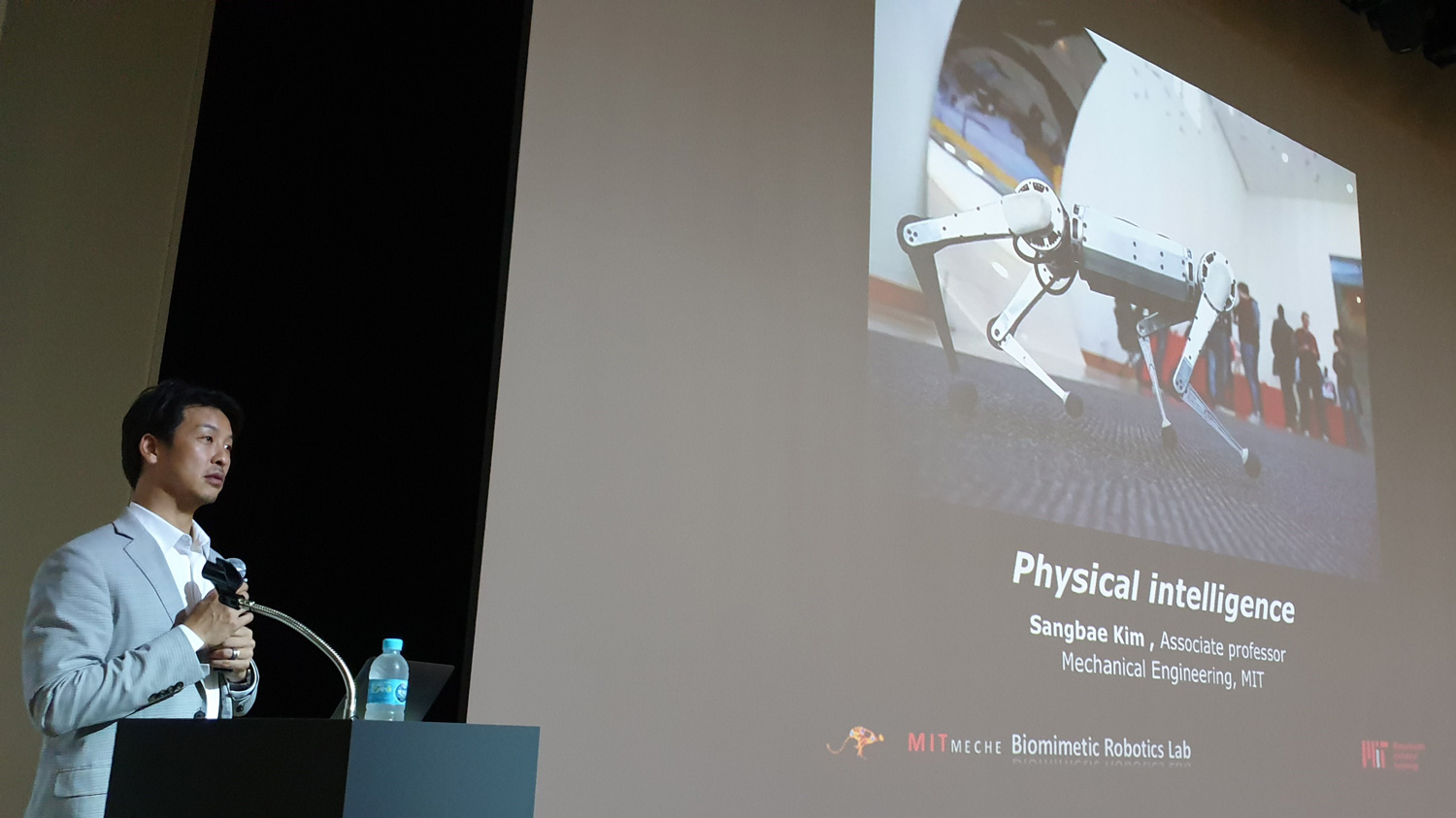
Professor Sangbae Kim, a world-class robot engineer, joined NAVER LABS as a technical consultant. In fact, the MIT Biomimetic Robotics Lab led by Professor Sangbae Kim had continuously worked closely with NAVER LABS. Both the MIT Cheetah III and MIT Mini Cheetah had been the result of the industrial-education cooperation between MIT and NAVER LABS.
We anticipate the commercialization of service robots to take place in the following order of stages: wheel-based autonomous robot → four-legged walking robot → robot capable of safely providing services with robot arms and hands. The industrial-education cooperation with NAVER LABS led by Professor Sangbae Kim is, therefore, a kind of advance research preparing for the stage following the wheel-based robot. (NAVER LABS has also continued to engage in the industrial-education cooperation with Professor Yong-jae Kim of Korea Tech for the robot arm AMBIDEX in a similar vein.)
Another brilliant plan is underway with Professor Sangbae Kim. We have disclosed our plan to manufacture a small number of the MIT Mini Cheetah and distribute them among leading researchers throughout the world. As widely known, the MIT Mini Cheetah is one of the best performing four-legged walking robots in the world. It is famous for its dynamic motion enough to perform a backflip, natural walks on complex terrain, the fastest speed among the existing motor-based four-legged small robots. It serves as an excellent platform to allow those who have research interests in the AI or robotics to personally test hardware and study algorithms. These results, which will provide an opportunity to unfold the potential underlying the robot mobility again and further drive the joint research outcome, will be presented at the MIT Mini Cheetah Workshop at this year’s International Conference on Intelligent Robots and Systems (IROS 2020).
“There is no need for robots to do what people are already good at. There are other areas of strength for robots.” (Professor Sangbae Kim during a NAVER seminar presentation)
COMET & M1X
M1 is NAVER’s first-ever robot. This robot creates high-precision indoor maps and plays a key role for the starting point of NAVER LABS’ technological roadmap. The spatial data created by M1 is used for VL, AR, self-updating maps and service robots among many others. However, M1 is having a good rest this year. It has handed over a significant portion of its roles to the follow-up version M1X. M1X obtains data faster and its ability to utilize data has further widened. (Although not intended, the cost of its production has also fallen.)
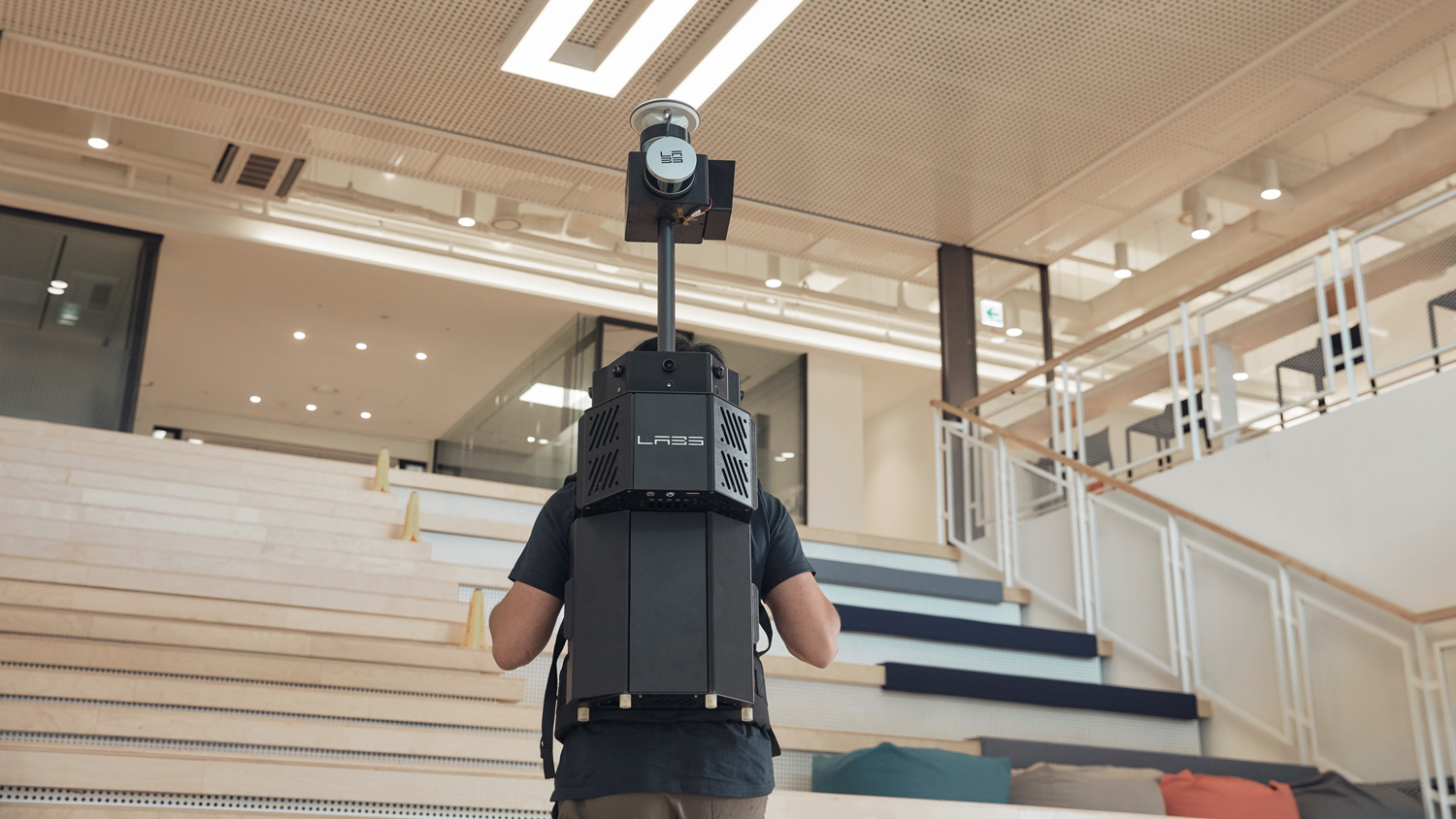
However, many areas still remain inaccessible even for M1X. Complex terrain such as stairs and sidewalks poses challenges for wheeled robots. That is what we have developed the backpack-type mapping device called COMET. We have also developed technologies that help data maintain its quality in a variety of environments and illumination levels, and that calibrate data collected while being shaken during the walking process. In the end, COMET that closely connects M1 for indoors and R1 for roads has resulted in the mapping triad for NAVER LABS.
For now, engineers carry COMET on their back to perform the mapping. However, the aforesaid Cheetah robot will take over COMET’s role in the future; all of our plans are interconnected.
“The most valuable gain from COMET may be that we are creating mapping device standards unique to NAVER LABS.” (Team Leader Sung yong Chung during a company interview)
VL Advancement & AR Navigation Demonstration
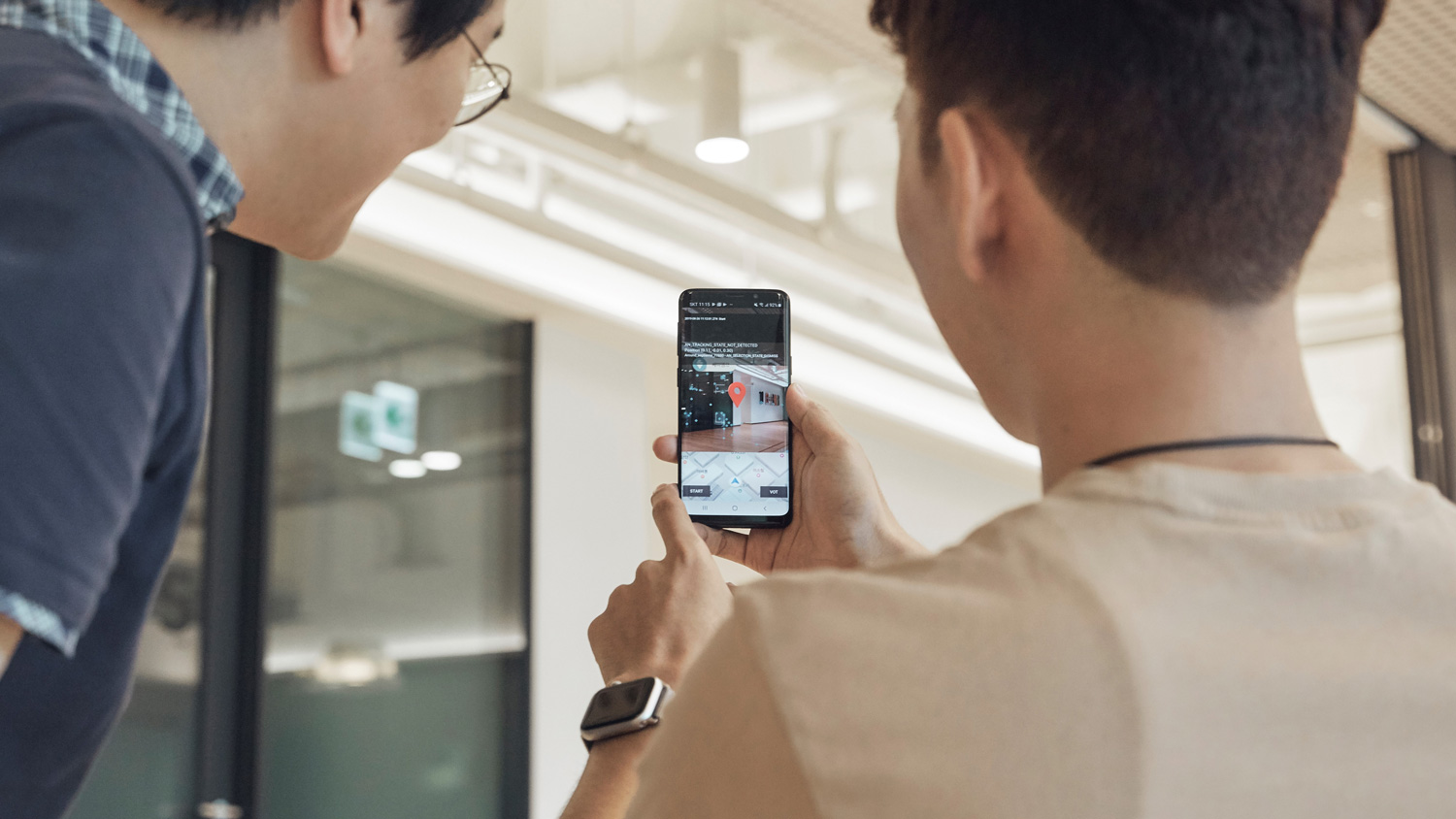
One of the technologies that NAVER LABS boasts of being the finest in the world is its visual localization (VL) technology. VL calculates very precise positions based on a single photograph. This technology is particularly useful indoors where the GPS is not applicable. The data obtained from the M1X and the COMET are used for VL. Another significant upgrade took place this year: R2D2 (Reliable and Repeatable Detectors and Descriptors for joint Sparse Keypoint Detection and Local Feature Extraction) technology of NAVER LABS Europe came first in the Long-Term Visual Localization challenge at CVPR 2019.
Although VL technology has been primarily used for calculating positions for autonomous driving at NAVER LABS, other projects are also in progress. It is the development of indoor AR navigation. Following the COEX mall demonstration unveiled at CES 2019, we held another demonstration at Hyundai Department Store–Pangyo. As it was a department store, there were so many people (all constitute noises), varying lights across stores (all constitute technological hurdles), and even worse, it constituted multiple stories connected via escalators. This time, we focused more on creating natural connections between different floors. Certainly, in addition to VL, we had further enhanced the technology to analyze various sensor/image information and track location, calibrated errors during movement and network delays through the real-time camera pose tracking, and utilized the VOT and location-based AT authoring system for seamless augmentation of useful information, thereby successfully delivering more complete demonstration.
“A lot of people are asking if it’s computer-generated, but it’s not.” (CEO Sangok Seok, describing the AR navigation demonstration at a press conference)
2000 km-long Road Layout Data Construction for Seoul and HD Map Dataset Distribution
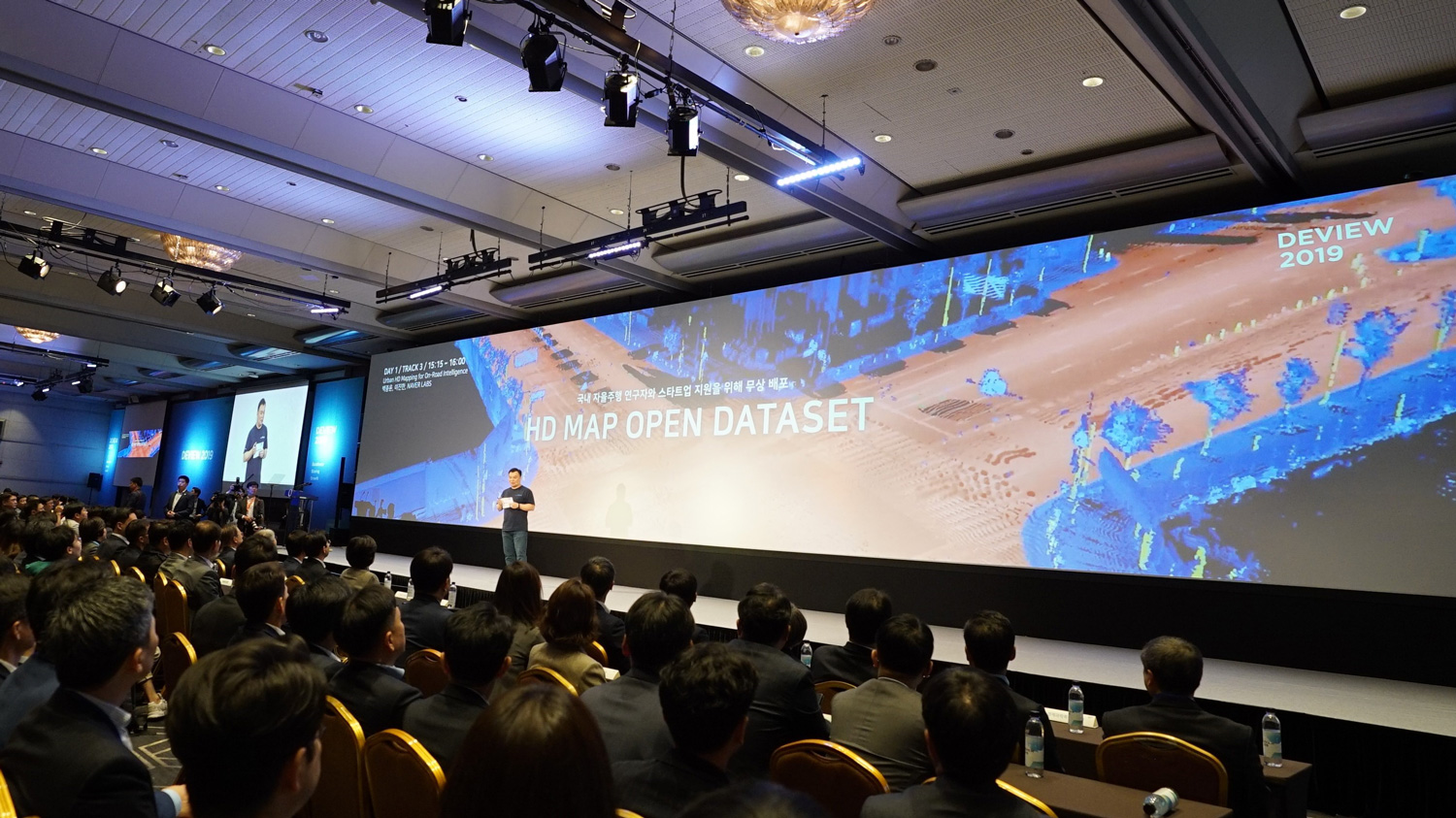
HD maps are key data for autonomous on-road driving technology. Therefore, NAVER LABS has engaged in the development of its own technology known as hybrid HD mapping. First, we extract road layout information from aerial photographs, and then organically combine the data collected by R1, our own mobile mapping system (MMS), while moving around the area to create HD maps. It is a highly useful solution for creating HD maps for large urban areas. We used our own technology to precisely extract the road layout data from aerial photographs. As a result, NAVER LABS completed establishing 2,000 km-long road layout data based on the aerial photographs of Seoul this year. This covers major roads with four lanes or more for autonomous driving vehicles to travel within Seoul.
This year, NAVER LABS carried through another meaningful plan. We distributed the HD map dataset free of charge that we have created based on our hybrid HD mapping technology. This was to promote research on autonomous driving in Korea, and NAVER LABS was the first company to ever do so in the nation. After all, joining hands to drive the growth of necessary technologies will benefit everyone in the future. We believe that this attempt will not end in vain. There is also a sense of crisis as many companies throughout the world are rapidly making progress.
"Our sense of mission is driving our commitment towards developing these technologies. We must have readiness or else we may have to hand the domestic data to foreign companies without any options.” (Senior Leader Jongyoon Peck during a press conference)
1784 Project Unveiled
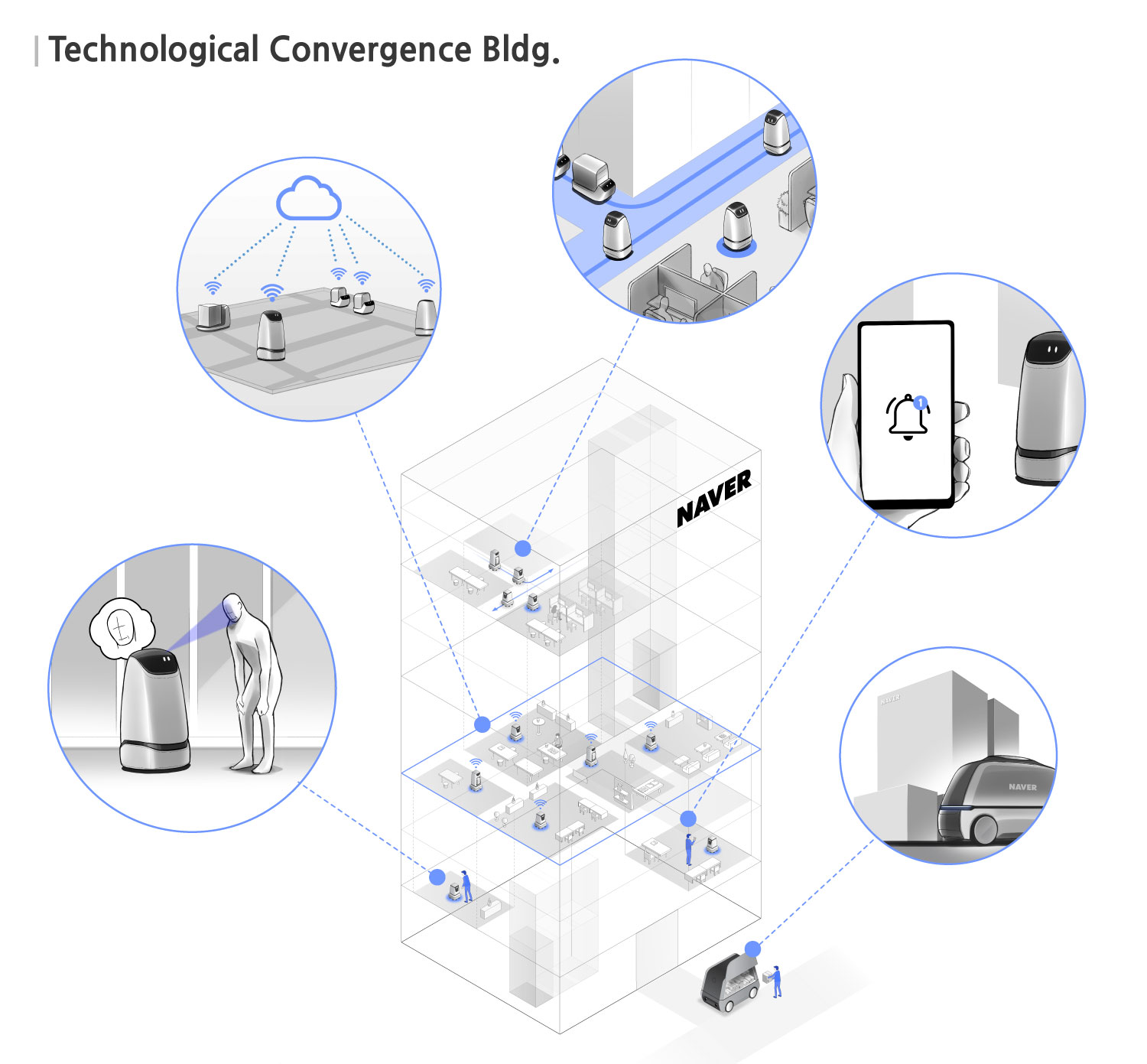
The 1784 project for the NAVER's second office building that had been in progress in confidence was showcased during a keynote speech at the DEVIEW 2019. This project is aimed at building the world's first robot-friendly building as its new headquarters by 2021. To this end, we are converging all the technologies that will drive the future of NAVER, such as 5G brainless robot technology, autonomous technology, AI and cloud. It is also the first reference space for A-CITY, NAVER LABS' vision of future cities. (Where shall we head next?)
“With the 1784 project, we aim to realize the true first generation of service robots.” (CEO Sangok Seok during a keynote speech at the DEVIEW 2019)
AROUND C Pilot
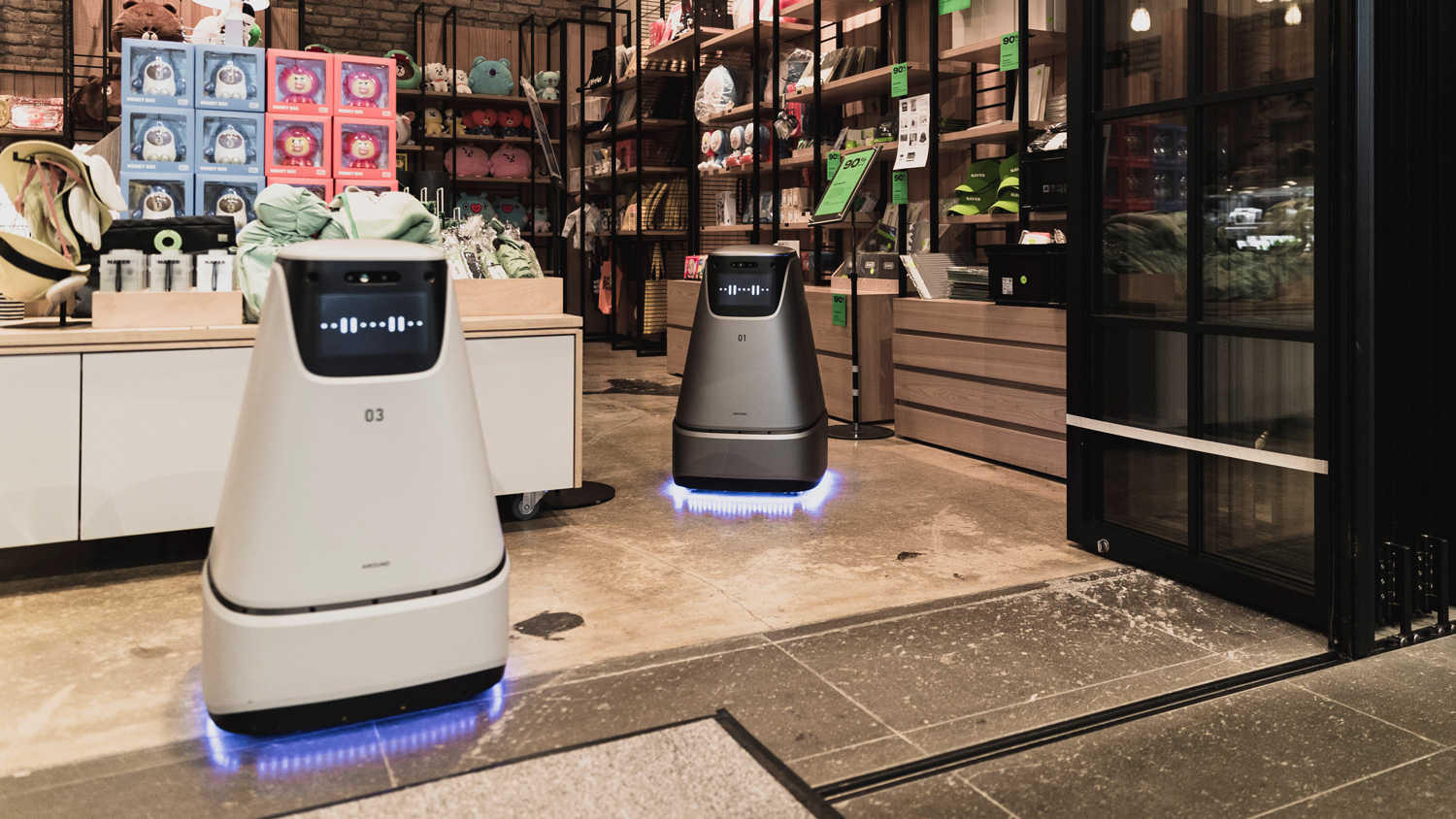
A new robot with the AROUND platform is now available. AROUND C, which has been designed to provide pilot tests at the cafe located on the first floor of NAVER Green Factory, provides cafe delivery services. The main test fields were cloud-based control, self-driving algorithms optimized through deep learning technology, and natural human-robot interaction (HRI). For the first time, this version has been applied with the nonverbal communication approach through the gaze.
On the day the official pilot test began, it enjoyed tremendous popularity among the children who were visiting NAVER Green Factory in groups. Although it posed an unexpected challenge for test engineers from day one, after all, the rugged paths of life are full of variables for both robots and engineers. The service went perfectly safe and seamless despite the children flocking after the robot. Robots will always be the friends of children, and so will children be friends of robots.
"We sought to apply interaction design to AROUND C that is considerate to the people around in the same space while not being frustrating or awkward at the same time. (PDX Leader Seoktae Kim at NAVER DESIGN COLLOQUIUM ‘19)
AI for Robotics Global Worksho
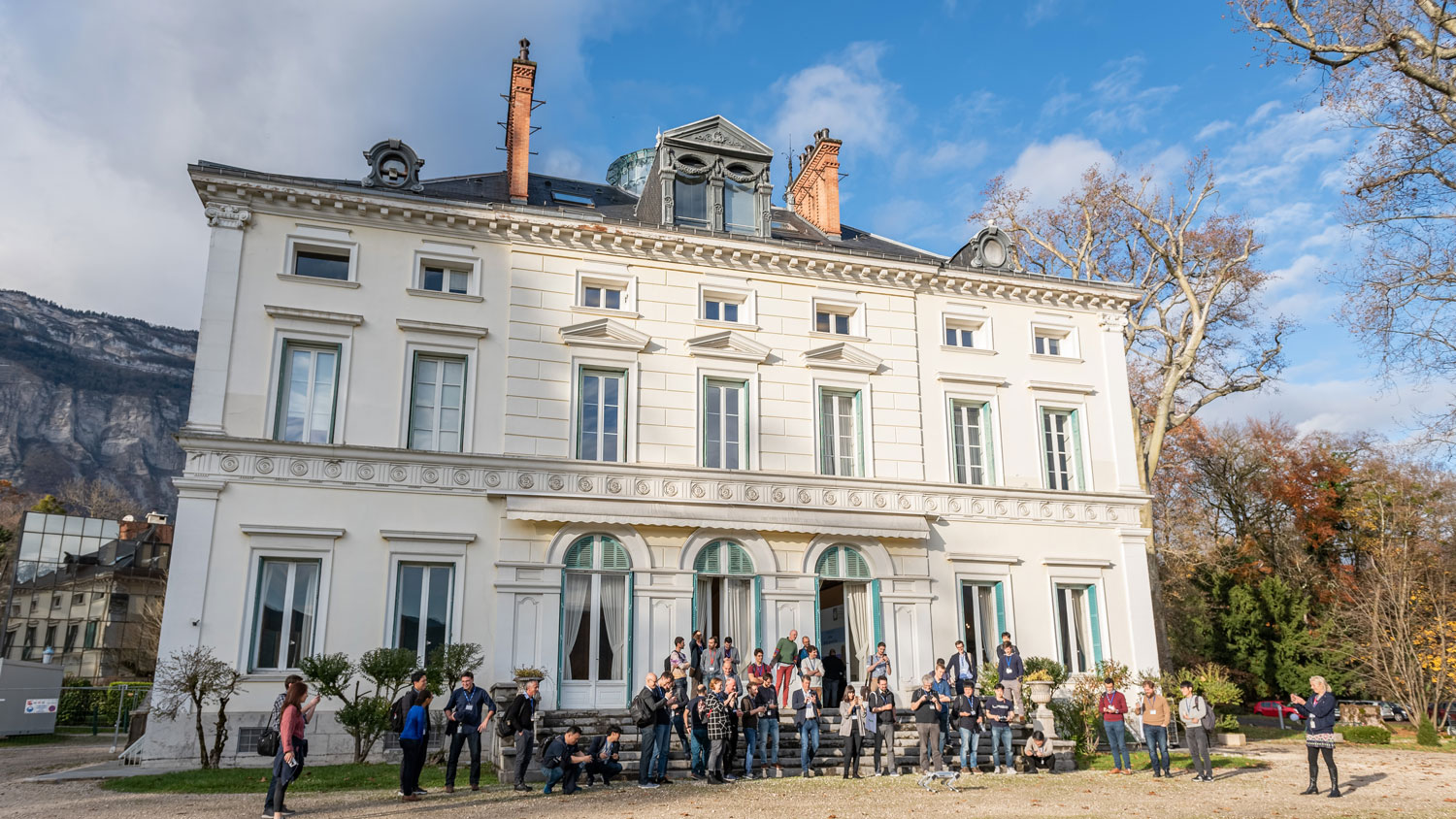
When introducing the office of NAVER LABS Europe, it is often referred to as an ‘artificial intelligence lab located in the most beautiful place in the world.’ In late November, eleven great scholars in the fields of AI and robotics from all over the world gathered here in Grenoble, France, and held the ‘AI for Robotics Global Workshop’ under the theme of ‘How AI can help integrate robots into everyday life.’ Marc Pollefeys, a professor from the ETH Zurich Institute of Technology who presented how to automatically convert photographs into 3D models for the first time, Cordelia Schmid, a research director from the INRIA, who continues to garner attention as the next-generation leader in the scientific field of computer vision, Daniel Cremers, a professor at the Technical University of Munich widely known for SLAM, the core technology for autonomous driving, CEO Sangok Seok, and Professor Sangbae Kim all graced the occasion.
The AI for Robotics Workshop was also the kick-start of the ‘Global AI Research Belt’ announced by NAVER. The Global AI Research Belt is an AI technology/human resources network that connects Europe and Asia to stand against GAFA (Google, Amazon, Facebook, and Apple) of the US and BATH (Baidu, Alibaba, Tencent, and Huawei) of China.
“After all, it is the human that studies the AI. The first, second and third most important components required for the AI are talent, talent, and talent.” (CEO Sangok Seok during a keynote speech at the DEVIEW 2019)
Although we have narrowed down the list to 10, there are other areas that are also worth to note. These include ALT project, ACROSS project, and AIRCART OPENKIT as well as its wheelchair version. For those who also find these fields interesting, please visit the website of NAVER LABS for further information.
Starting with CES at the beginning of the year and ending with the AI for Robotics Global Workshop at the end of the year, the head and tail year appear to converge, clearly demonstrating the adage that “technology knows no borders.” In the year 2020, we will refuse to be bound by any limitations or boundaries, and continue to power our imagination that defy challenges through technology.